RF Tube vs Glass Tube CO2 Laser: A Clinic Buyer’s Guide
An RF tube vs glass tube CO2 laser comparison should separate source design from the performance of the finished medical device. Common sales labels contrast RF-excited metal sources with DC-excited glass tubes, but a source label alone does not establish better clinical results, safety, or service value.
The confusion often begins with a comparison written for engraving wood or cutting acrylic. Those buyers have useful technical questions, but their finished-work tests cannot answer whether a clinic’s proposed equipment suits a clinical purpose. Start with the exact source and system instead.
This guide helps clinic buyers turn broad claims into document requests. You will compare output definitions, cooling requirements, support terms, and the evidence connecting a component to the delivered machine.
Key Takeaways
RF excitation, DC excitation, and enclosure material describe different design details.
Source specifications do not automatically describe output at a treatment handpiece.
Confirm cooling and maintenance from the actual model’s documents.
A source brand or tube category does not prove clinical superiority.
Compare written service obligations and configuration records before accepting a claim.
RF Tube vs Glass Tube CO2 Laser: Separate the Design Labels
Identify excitation and construction separately
In common supplier language, RF describes radio-frequency excitation of the laser gas. Glass usually describes the enclosure of a tube commonly paired with DC excitation. Ask the supplier to state both the excitation method and the construction of the proposed source.
For an RF tube vs glass tube CO2 laser review, keep those details in separate fields. Do not assume that the short name on a quotation identifies every part of the design. Request a source model or assembly identifier and the matching technical sheet.
Also distinguish the power entering an RF module from the method that excites the gas. An electrical input described as DC does not, by itself, mean the laser is a DC-excited glass-tube design. Read the source architecture and its power requirements together.
Before asking for equipment proposals, prepare your intended professional use, target market, and candidate model questions. Ask the supplier which source documents apply to that configuration. This gives your technical reviewer a clear starting point.
RF excitation is different from RF microneedling
An RF tube vs glass tube CO2 laser discussion concerns a laser source. RF microneedling describes a separate treatment technology. Seeing the letters RF in a CO2 source description does not mean the console includes a microneedling function.
Illustrative scenario: A buyer reads “RF metal tube” and adds RF microneedling to the proposed service list. The technical lead asks for the actual configuration and accessory list, then corrects the project brief. This fictional example reports no patient result or completed purchase.
Check each technology in a combination console separately. Identify its components, instructions, and relevant evidence. A shared enclosure does not make their functions or intended uses interchangeable.
A source remains a component
The Coherent Diamond C-40 preinstallation manual describes a sealed RF-excited source with continuous-wave or modulated operation. It also states that the component needs integration by a qualified original equipment manufacturer before delivery to an end user.
That distinction matters in an RF tube vs glass tube CO2 laser assessment. The component manual does not establish the clinical evidence, instructions, or market status of another manufacturer’s finished machine. This guide does not identify that Coherent component as a LaserTell part.
Compare Output Definitions, Not Just Wattage
Read the name of the quantity
A wattage number needs a definition. Ask whether it describes average optical output, peak output, electrical input, or another rating. Keep the measurement conditions and the location of the measurement with the figure.
For an RF tube vs glass tube CO2 laser comparison, a large number without that context is a question, not an advantage. Do not compare a source’s peak figure with another system’s average rating. Ask the responsible engineer to establish a valid comparison basis.
The Luxinar SR 25i technical specification illustrates the distinction. It separately lists rated output, peak output, and shipment power, with footnotes describing conditions. Its named source is a 9.3µm component; those specifications are not clinical settings or LaserTell system measurements.
This guide does not use the source’s numerical output limits to rank medical machines. The useful lesson is to preserve the definition and conditions beside each quantity. Missing context should remain visible until it is resolved.
Separate source output from delivered output
An RF tube vs glass tube CO2 laser review should ask where output is specified or measured. Source documentation and system documentation may describe different points in the delivery path. Have the technical reviewer check the scanner, beam-delivery assembly, and applicable handpiece records.
Request evidence relevant to the complete proposed configuration. A source specification cannot simply be copied into a column labeled treatment output. Equally, a photograph of a scanner does not establish its documented performance.
Comparison item
Question for the supplier
Excitation and construction
What source design and identifier are supplied?
Output rating
Which quantity is stated, and under what conditions?
Measurement point
Does the figure refer to the source or another system location?
Pulse information
Which definitions and operating conditions apply?
Delivery assembly
Which scanner and handpieces match the records?
Evidence scope
Does the document cover the proposed configuration?
Check pulse and mode terminology
In an RF tube vs glass tube CO2 laser comparison, similar mode names do not establish identical behavior. Ask what the manufacturer means by each name and which technical document defines it. A marketing label should not replace the relevant output information.
This article supplies no pulse widths, energies, densities, or treatment settings. Those belong to the device instructions and qualified clinical practice. The purchasing task is to obtain clear records for review.
Cooling and Maintenance Depend on the Actual Design
Read the document, not just its filename
The Coherent PDF linked above provides a useful document-control example. Its URL contains “liquid,” but the returned cover and document identify an air-cooled C-40 manual. Do not use the filename as evidence that the supplied component is liquid-cooled.
For an RF tube vs glass tube CO2 laser project, match the title, model, revision, and body of the document. Ask the supplier to resolve conflicting names before using the file to plan facilities. A downloaded document can be genuine and still be the wrong version for your proposal.
RF excitation alone does not settle the full cooling arrangement. The Luxinar specification, for example, includes cooling-flow and refrigeration requirements for its particular RF-excited component. That is a model-specific counterexample to a blanket “RF needs no liquid cooling” claim, not an installation instruction for clinic equipment.
Check the whole system’s requirements
Keep source requirements and finished-machine requirements distinct in the RF tube vs glass tube CO2 laser file. Request the applicable room, environmental, utility, and maintenance information for the delivered device. Do not plan a clinic installation from an unrelated industrial component sheet.
Illustrative scenario: A comparison table puts one source’s peak output beside another proposal’s undefined wattage. The reviewer separates the quantities and asks for the missing definitions and cooling documents. No performance advantage is assumed in this fictional review.
If a supplier says a source needs little maintenance, ask which tasks remain elsewhere in the system. A sealed source description does not answer every question about accessories, controls, cooling, or service. Obtain the actual task list and authorized responsibilities.
Keep technical work within its approved scope
An RF tube vs glass tube CO2 laser buying guide cannot authorize staff to open a console, replace a source, or adjust an optical path. Follow the model’s instructions and the appropriate authorized service route. Do not copy internal repair steps from an online demonstration.
For your RF tube vs glass tube CO2 laser review, request the maintenance plan, approved parts, fault-reporting route, and service records. Keep missing answers pending. Do not invent a universal water-change interval or a lifetime inspection schedule.
What Source Claims Cannot Prove About Clinical Results
Ask for evidence at the device level
An RF tube vs glass tube CO2 laser source comparison does not, by itself, prove that one finished platform produces better scar, wrinkle, or pain outcomes. Such claims need evidence for the actual devices, populations, endpoints, and conditions being compared. This guide has not established a clinical winner from matched medical-platform research.
A better beam description in a component sheet is not a patient-outcome study. Likewise, an engraving result cannot be transferred to skin treatment. Keep technical observations separate from clinical conclusions in the purchasing summary.
If a supplier cites a paper, ask which configuration was studied and whether it matches the proposal. Have the qualified clinical reviewer assess its relevance. A familiar source brand cannot fill a missing device-level evidence file.
Review labeling and risks separately
For an RF tube vs glass tube CO2 laser decision, ask for the exact model’s instructions for use, intended uses, and relevant market records. The FDA medical-laser overview describes risks including infection, scarring, and skin-color changes. A source category does not remove the need for clinical assessment.
This article does not establish a particular LaserTell model’s market status or individual patient suitability. Keep those questions with the appropriate clinical and market reviewers. Do not assign a skin type from ethnicity, location, or a photograph.
RF Tube vs Glass Tube CO2 Laser: Compare Service and Cost
Define lifetime before using it in a budget
An RF tube vs glass tube CO2 laser lifespan claim needs a clear meaning. Ask whether the supplier is describing operating hours, calendar time, warranty coverage, a service expectation, or an output threshold. Request the conditions and the supporting record.
Do not treat a warranty period as guaranteed useful life. Do not turn an unverified source-longevity estimate into a promise for the entire machine. This guide has not established a universal RF or glass-tube lifespan.
In an RF tube vs glass tube CO2 laser budget, source service terms may differ from those for other assemblies. Ask which parts, labor, shipping, and checks are included. Keep exclusions visible rather than summarizing everything as “covered.”
Use actual service inputs
For an RF tube vs glass tube CO2 laser cost review, request a current written scope for replacement or repair where available. Identify the source assembly, compatibility, authorized labor, shipping, and required checks. Unknown costs should remain unknown rather than becoming zero in a spreadsheet.
Service question
Written answer to request
Source identity
Exact assembly and approved compatibility
Coverage
Warranty terms, conditions, and exclusions
Work scope
Parts, labor, shipping, and post-service checks
Timing
Response and repair arrangements, with limits
Change handling
Records and reviews required for substitutions
Avoid a universal claim that higher upfront cost guarantees lower ownership cost. A useful calculation needs actual prices, obligations, and a clear planning period. It also needs a defensible basis for uncertain events rather than a guessed failure rate.
Keep the RF tube vs glass tube CO2 laser technical decision separate from a profit forecast. A service proposal can help the clinic understand responsibilities, but it cannot establish patient demand or a guaranteed financial return. Use the clinic’s own reviewed business inputs for that work.
Build a Source-to-System Evidence Checklist
Connect each record to the proposed configuration
Start an RF tube vs glass tube CO2 laser file with the system model and the source identifier supplied by the manufacturer. Add the current specification, applicable instructions, delivery configuration, and service terms. Record the document revision and the person assigned to review it.
Use three clear states in the RF tube vs glass tube CO2 laser file: confirmed for the stated purpose, pending, and not applicable with a reason. A received document isn’t automatically the right document. Record who checked it and what question it answers. Let the responsible reviewer close the question against the named record.
Illustrative scenario: A supplier sends a source manual, but the assembly identifier does not match the proposed configuration. The buyer requests clarification and leaves the source field pending. This fictional example assumes neither a defect nor equivalence between the components.
Request model-specific LaserTell information
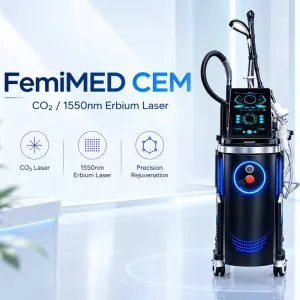
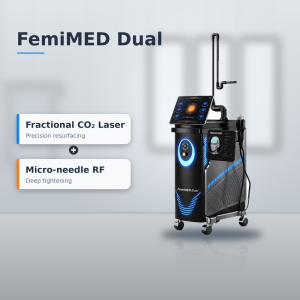
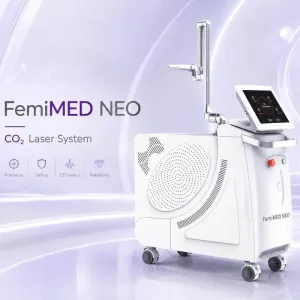
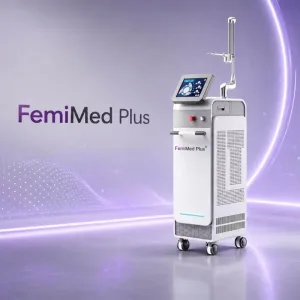
The LaserTell CO2 equipment directory lists different FemiMED platforms and notes that features vary by model. Use it to identify candidates, then request the actual source and system documents. Do not infer one supplier’s component identity from another model’s brochure.
The FemiMED NEO product page identifies a compact 75W, 10,600nm platform. Those are manufacturer-listed model details, not independent measurements or evidence that it uses either component discussed above. Confirm the offered configuration in the proposal.
For an RF tube vs glass tube CO2 laser inquiry, send the intended professional use, destination market, and specific document questions. Ask who can explain output definitions, cooling needs, and service responsibilities. Keep the written answers with the comparison rather than relying on a verbal summary.
FAQs and Next Steps
Does RF excitation mean the system needs no liquid cooling?
No blanket rule follows from the label. Check the actual source and complete machine’s requirements. Different documented designs can have different cooling arrangements.
Do RF sources always give better clinical results?
That conclusion needs device-level clinical evidence. This RF tube vs glass tube CO2 laser guide does not establish a universal outcome advantage from the source category.
Are two matching wattage figures directly comparable?
Only after the quantity, measurement point, and conditions are clear. Peak output, average output, and electrical input are different descriptions.
Can a clinic swap a glass source for an RF source?
Do not assume compatibility or authorization. Refer any proposed change to the equipment manufacturer and authorized technical reviewers. This guide provides no conversion or repair procedure.
Which documents should a buyer request first?
Request the exact system and source identifiers, current technical sheets, applicable instructions, configuration list, and service terms. Have qualified reviewers assess the evidence relevant to the intended use and market.
To discuss RF tube vs glass tube CO2 laser questions for a specific platform, contact LaserTell with your model and document requirements. Request clear source-to-system records before choosing equipment. A useful comparison ends with traceable answers and visible open questions, rather than a universal winner based on a tube label.
Key Takeaways Why Melasma Comes Back Even When the First Result Looks Good Anyone weighing pico laser for melasma runs into the same wall. The first...
A public fractional CO2 laser machine price is a starting point, not a complete clinic budget. On October 27, 2026, Luma Body’s product page displayed...
Choose a fractional CO2 laser machine by matching your clinic’s intended uses to an exact model, its supporting documents, facility needs, and service terms. Compare...