How Cryolipolysis Works and What to Look for in a Fat Freezing Machine
If you run an aesthetic clinic, a medical spa, or a body-contouring studio, you have watched demand for non-surgical fat reduction grow. Clients want visible...

Picosecond laser technology has become an important solution for professional aesthetic clinics, skin management centers, and medical aesthetic facilities that require flexible pigment treatment capabilities. By delivering laser energy through extremely short picosecond-level pulses, the technology generates high peak power and creates a photoacoustic effect that helps fragment target pigment particles.
However, the performance of a picosecond laser system depends not only on pulse technology but also on wavelength selection. Different wavelengths have different penetration characteristics and pigment absorption properties, making them suitable for different applications.
A professional Pico Laser Machine may integrate multiple wavelength options, including 532nm, 755nm, 1064nm, and 1320nm. Understanding how these wavelengths work helps clinics select suitable laser solutions for tattoo pigment treatment, pigmentation management, and selected skin rejuvenation applications.
A Picosecond Laser is an advanced laser system that delivers energy through extremely short pulse durations. Compared with traditional laser systems, picosecond technology can generate higher peak power within a shorter delivery time, allowing laser energy to interact more precisely with target pigment areas.
The core technology combines Q-Switched Nd:YAG laser technology with picosecond-level pulse technology. When the laser energy reaches the target pigment, it creates a photoacoustic effect that helps break pigment particles into smaller fragments.
These fragmented particles can then be gradually processed through natural biological clearance mechanisms. The treatment performance depends on multiple factors, including wavelength selection, energy settings, pulse frequency, spot size, and professional operating protocols.
The main advantage of picosecond technology is the extremely short pulse duration.
Instead of relying mainly on prolonged heat delivery, picosecond pulses transfer concentrated energy within a very short period. This rapid energy release produces mechanical stress around pigment particles, helping achieve efficient pigment fragmentation.
Because different pigments respond differently to laser energy, selecting the appropriate wavelength and treatment parameters is essential for professional applications.
Different wavelengths provide different optical characteristics. The four wavelength options commonly used in professional picosecond laser systems — 532nm, 755nm, 1064nm, and 1320nm — support different treatment applications.
The 532nm wavelength is commonly used for superficial pigment applications and selected colored tattoo pigments.
Due to its shorter wavelength characteristics, 532nm is generally associated with targets located closer to the skin surface. It is often selected for specific pigment applications where stronger absorption at this wavelength is required.
In a multi-wavelength system, 532nm provides an additional option for operators when treating certain pigmentation conditions and colored tattoo pigments.
The 755nm wavelength provides different optical characteristics compared with 532nm and 1064nm wavelengths.
It can be used for selected light-colored and special pigment applications, providing additional flexibility for professional operators. By including 755nm in a picosecond laser platform, clinics can expand their treatment options compared with systems limited to only one or two wavelengths.
The 1064nm wavelength is widely used in professional tattoo pigment applications because of its deeper penetration characteristics.
It is commonly associated with black and dark tattoo pigments as well as deeper pigmentation applications. For Picosecond Laser Tattoo Removal, 1064nm is an important wavelength option because darker pigments often require deeper laser energy delivery.
The 1320nm wavelength has different application characteristics compared with pigment-focused wavelengths.
It is commonly associated with selected skin rejuvenation and skin texture improvement applications. By integrating 1320nm together with pigment-related wavelengths, a multi-wavelength picosecond laser platform can provide broader application flexibility for professional skin management facilities.
Different pigments absorb laser wavelengths differently. Because of this, one wavelength cannot provide the same performance across all pigment colors and treatment applications.
For example, shorter wavelengths are commonly associated with more superficial pigment applications, while longer wavelengths generally provide deeper penetration characteristics.
Therefore, professional operators need to select suitable wavelengths according to pigment type, pigment depth, treatment area, and specific application requirements.
Single-wavelength laser systems are limited because they are designed around one specific optical characteristic.
For clinics offering different services, a single wavelength may restrict their ability to address various tattoo colors, pigmentation conditions, or skin management procedures.
A multi-wavelength platform provides greater flexibility by combining different wavelength options in one system, allowing clinics to support more professional applications without relying on multiple single-function devices.
Picosecond Laser Tattoo Removal works by delivering high-energy laser pulses to target tattoo pigments.
When the selected wavelength is absorbed by pigment particles, the picosecond pulse creates a photoacoustic effect that helps break larger pigment particles into smaller fragments. The treatment process depends on selecting appropriate wavelength and operating parameters according to the tattoo pigment characteristics.
Different tattoo colors and pigment depths may require different wavelength approaches, which is why multi-wavelength systems are widely used in professional applications.
The wavelength combination is one of the most important factors when selecting a professional picosecond laser system.
Clinics should consider whether the available wavelengths match their intended applications, including tattoo pigment treatment, pigmentation management, and skin rejuvenation services.
A system with multiple wavelength options provides greater flexibility for different treatment requirements.
In addition to wavelength configuration, buyers should also evaluate energy control, cooling performance, maintenance requirements, and technical support.
A reliable cooling system and proper maintenance procedures are important for maintaining stable equipment operation over time.
Professional training and understanding of laser safety and operating procedures are also essential for proper equipment use.
After understanding how 532nm, 755nm, 1064nm, and 1320nm wavelengths work, the next consideration for professional clinics is how to integrate these wavelength options into one practical treatment platform.
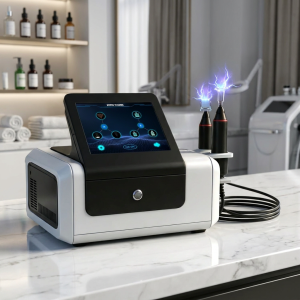
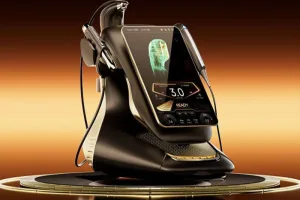
The Picosecond Laser Tattoo Removal Machine featured in this article is designed with four wavelength options: 532nm, 755nm, 1064nm, and 1320nm. By combining different wavelength characteristics in one system, it provides professional users with greater flexibility for tattoo pigment treatment, pigmentation management, and selected skin rejuvenation applications.
Different wavelengths serve different purposes within the system. The 532nm wavelength is commonly used for superficial pigmentation and selected colored tattoo pigments, while the 755nm wavelength provides additional options for certain light-colored and special pigments. The 1064nm wavelength offers deeper penetration characteristics and is commonly selected for black and dark tattoo pigments. The 1320nm wavelength expands the platform’s application range into selected skin rejuvenation and skin texture improvement procedures.
Compared with single-wavelength systems, this four-wavelength configuration allows clinics to address more diverse treatment requirements through one professional platform.
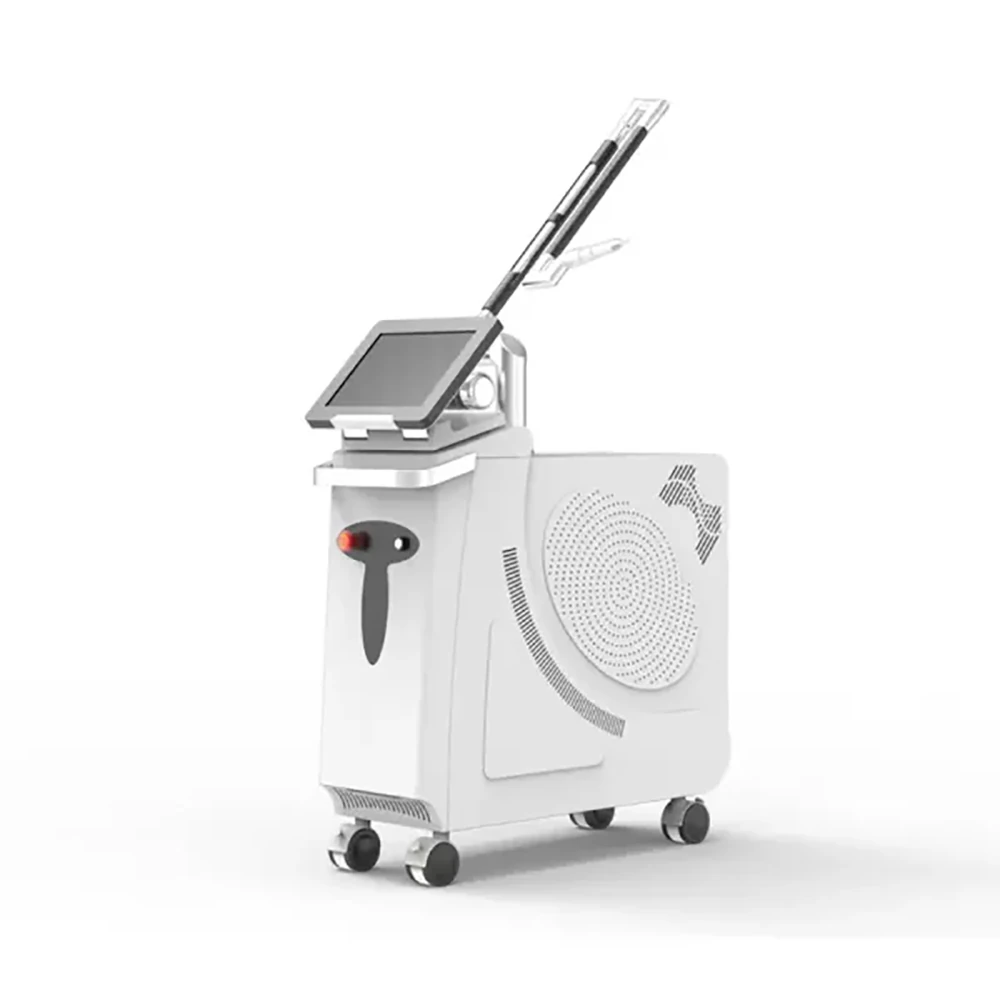
The core technology of this Pico Laser Machine combines Q-Switched Nd:YAG laser technology with picosecond-level pulse technology.
By delivering laser energy within an extremely short pulse duration, the system generates high peak power and produces a photoacoustic effect that helps fragment target pigment particles into smaller fragments.
The operator can select appropriate treatment parameters according to pigment characteristics, treatment objectives, and application requirements. This flexible control approach allows the system to support different professional treatment scenarios while maintaining precise energy delivery.
Stable operation is essential for professional aesthetic equipment, especially during repeated treatments.
The system integrates cooling and protection technologies designed to support stable performance during operation. Components such as the cooling system, optical structure, and energy control system work together to maintain reliable equipment performance.
With its multi-wavelength configuration and professional design, the Picosecond Laser Tattoo Removal Machine provides clinics with a versatile solution for expanding tattoo removal, pigmentation treatment, and skin management services.
A: A Picosecond Laser is commonly used for professional pigment-related applications, including tattoo pigment treatment, pigmentation management, and selected skin rejuvenation procedures. Its ultra-short pulse technology creates a photoacoustic effect that helps fragment target pigment particles.
A: The main difference is their optical characteristics and typical application range. The 532nm wavelength is commonly used for superficial pigmentation and selected colored tattoo pigments, while the 1064nm wavelength provides deeper penetration characteristics and is commonly used for black and dark tattoo pigments.
A: A multi-wavelength Pico Laser Machine provides more application flexibility because different pigments and skin management procedures may require different wavelength characteristics. By combining 532nm, 755nm, 1064nm, and 1320nm wavelengths, one system can support a broader range of professional applications.
The effectiveness of a picosecond laser system depends on both pulse technology and wavelength selection. The 532nm, 755nm, 1064nm, and 1320nm wavelengths each provide different characteristics, allowing professional operators to address different pigment colors, depths, and skin management requirements.
Compared with single-wavelength systems, a multi-wavelength Pico Laser Machine provides greater flexibility by combining multiple application possibilities into one platform.
For professional aesthetic clinics, medical aesthetic centers, and beauty equipment distributors, selecting a suitable Picosecond Laser Tattoo Removal Machine requires careful evaluation of wavelength configuration, energy control, cooling performance, and long-term equipment support.
 23Sep
23Sep
 18Sep
18Sep
 17Sep
17Sep