How Cryolipolysis Works and What to Look for in a Fat Freezing Machine
If you run an aesthetic clinic, a medical spa, or a body-contouring studio, you have watched demand for non-surgical fat reduction grow. Clients want visible...

Tattoo removal and pigmentation treatments remain some of the most challenging procedures in aesthetic clinics. Different tattoo colors, pigment depths, and patient skin types can significantly affect treatment outcomes, making laser selection a critical decision for practitioners.
For years, Q-switched laser systems have been widely used for pigment removal. However, traditional nanosecond technology may involve greater thermal accumulation, which can increase discomfort, extend recovery time, and require careful parameter management, especially for darker skin types.
A Picosecond Laser Machine addresses these challenges by delivering ultra-short pulses that generate photomechanical shockwaves instead of relying primarily on heat. This allows pigment particles and tattoo ink to be fragmented into finer particles while minimizing unnecessary thermal effects on surrounding tissues.
For clinics considering an equipment upgrade, choosing the right Pico Laser Machine requires more than looking at power specifications. Key factors such as pulse duration, wavelength selection, beam quality, cooling performance, treatment versatility, and long-term reliability all influence the overall value of the system.
A picosecond laser delivers energy in ultra-short pulses measured in trillionths of a second (10⁻¹²s). Compared with traditional Q-switched lasers that operate in the nanosecond range (approximately 5–10ns), picosecond technology creates a stronger photomechanical effect with less thermal diffusion.
By generating high-energy shockwaves, a Picosecond Laser Machine can break tattoo ink and pigment particles into finer fragments rather than relying mainly on heat. Smaller particles may be cleared more efficiently by the body’s natural processes, while reduced heat accumulation helps minimize unnecessary damage to surrounding tissues.
For clinics, this difference means picosecond technology can provide greater flexibility for pigment removal, tattoo treatments, and skin rejuvenation procedures when appropriate treatment parameters are selected.
| Feature | Picosecond Laser | Q-Switched Laser |
| Pulse duration | Approximately 300–500ps | Approximately 5–10ns |
| Main mechanism | Photomechanical effect | Mainly photothermal effect |
| Pigment fragmentation | Breaks pigments into finer particles | Produces relatively larger pigment fragments |
| Heat accumulation | Lower thermal diffusion | Higher thermal effect |
| post-treatment downtime | Generally shorter downtime | May require longer recovery depending on settings |
| Application range | Tattoo removal, pigmentation treatment, skin rejuvenation | Mainly pigment-related treatments |
A modern Picosecond Nd Yag Laser combines picosecond pulse technology with Nd:YAG laser wavelengths, allowing clinics to address different pigment targets through wavelength selection.
Pulse duration is one of the most important specifications when evaluating a Picosecond Laser Machine.
A shorter pulse width allows the laser to deliver energy within a shorter time period, creating higher peak power. This helps generate stronger photomechanical effects while limiting unnecessary heat transfer to surrounding tissues.
For clinics performing tattoo removal or pigmentation procedures, pulse duration can influence:
Compared with conventional nanosecond systems, picosecond technology uses much shorter pulses to target pigments more precisely.
A versatile laser platform should provide suitable wavelengths for different pigment colors and treatment goals.
Different wavelengths target different pigment depths and colors. When selecting a Picosecond Laser Machine, clinics should consider whether the system provides suitable wavelength options for their treatment needs.
| Wavelength | Primary Target | Common Applications |
| 1064nm | Deep pigments and dark tattoo colors | Black tattoo ink, blue tattoo ink, deeper pigmentation concerns |
| 532nm | Superficial and lighter pigments | Red tattoo ink, orange pigments, purple pigments, certain epidermal pigmentation concerns |
| 755nm with Honeycomb Lens | Light-colored tattoos and skin rejuvenation applications | Green and light cyan tattoo ink, skin texture improvement, collagen remodeling, acne scar treatment |
A multi-wavelength Pico Laser Machine provides greater treatment flexibility by allowing practitioners to select appropriate wavelengths for different pigment types and clinical applications.
Laser energy consistency directly affects treatment accuracy and repeatability.
When selecting equipment, clinics should pay attention not only to maximum output energy but also to:
An unstable beam may create uneven energy delivery, which can affect treatment consistency.
A flat-top beam profile is designed to provide more uniform energy distribution across the treatment spot. This can help avoid excessive energy concentration in specific areas and support safer treatment parameter management.
Professional laser systems may also include adjustable spot sizes and fluence settings, allowing practitioners to adapt treatment parameters according to different clinical needs.
Aesthetic clinics often operate laser equipment multiple times per day, making thermal management an important consideration.
A reliable cooling system helps maintain stable laser performance during continuous operation. When evaluating a system, clinics should consider:
Advanced systems may include multiple safety controls to protect internal optical components and maintain stable output during daily clinical use.
For clinics with high patient volume, equipment reliability can directly influence workflow efficiency and service availability.
Beyond technical specifications, practical usability is also important.
A clinic-friendly laser system should provide:
For example, an articulated arm design can improve operator flexibility by allowing easier positioning during different treatment procedures.
Maintenance requirements should also be considered during purchasing decisions. Components with longer service life and stable performance can help reduce unexpected downtime and lifetime operating costs.
Tattoo removal is one of the most common applications of picosecond laser technology. A Pico Laser Tattoo Removal Machine uses ultra-short pulses to create photomechanical effects, helping break tattoo pigments into finer particles for more efficient treatment.
With multiple wavelength options, picosecond systems can address different tattoo colors. The 1064nm wavelength is commonly used for black and dark pigments, 532nm for red, orange, and purple pigments, while 755nm can support the treatment of green and light cyan tattoo inks. Picosecond technology is also used for permanent makeup correction, such as eyebrow pigment removal, where precise pigment targeting is important.
Beyond tattoo removal, picosecond laser systems are also applied in aesthetic clinics for pigmentation management and skin rejuvenation procedures. Depending on the system configuration, applications may include uneven pigmentation improvement, age spot treatment, melasma management, and skin texture enhancement.
Some picosecond systems equipped with fractional lens technology can create controlled micro-beam patterns to support skin remodeling applications. Treatment results depend on factors such as skin type, treatment parameters, and practitioner experience.
After understanding the key factors for selecting a picosecond laser system, clinics can better evaluate whether a device meets their treatment requirements and operational needs.
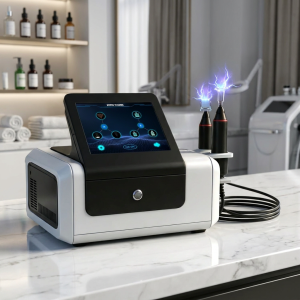
The LaserTell Picosecond Laser System is developed based on multi-wavelength Nd:YAG laser technology, integrating 1064nm, 532nm, and 755nm wavelengths to support tattoo removal, pigmentation treatments, and skin rejuvenation applications.
As a professional Picosecond Nd Yag Laser system, it combines ultra-short pulse technology, stable energy delivery, and clinic-oriented design features for professional aesthetic practices.
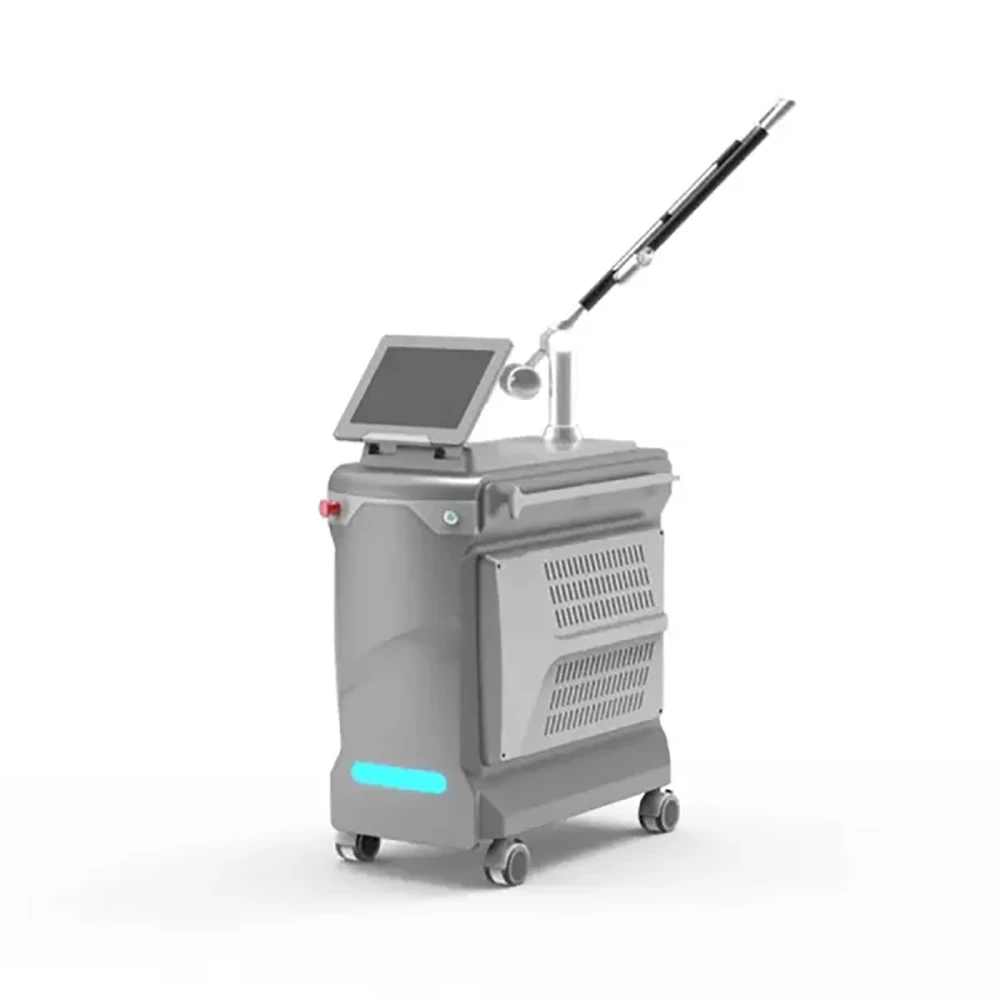
A major advantage of the LaserTell system is its three-wavelength configuration, allowing practitioners to select suitable wavelengths for different pigment targets.
| Wavelength | Applications |
| 1064nm | Black and blue tattoo pigments, deeper pigment targets |
| 532nm | Red, orange, and purple tattoo pigments, superficial pigmentation |
| 755nm Honeycomb Lens | Green and light cyan tattoo pigments, skin texture improvement, collagen remodeling applications |
The multi-wavelength platform provides greater flexibility compared with single-wavelength systems, allowing clinics to expand their treatment options with one device.
The LaserTell Picosecond Laser Machine is designed to provide consistent energy delivery during clinical procedures.
Key specifications include:
The flat-top hat beam profile helps achieve more uniform energy distribution, supporting consistent treatment performance.
For long-term operation, the system features a dual-lamp dual-rod Nd:YAG optical cavity and a xenon lamp lifespan exceeding 5,000,000 shots, helping reduce maintenance frequency.
The LaserTell system incorporates practical design features to support daily clinic workflows.
The 7-joint Korean articulated light guide arm provides:
The system also includes a dual-circuit cooling protection design with real-time temperature monitoring and water flow protection. Automatic safety controls help protect internal optical components during continuous operation.
For medical aesthetic equipment, quality management and compliance are important considerations.
The LaserTell Picosecond Laser System complies with:
For aesthetic clinics, treatment efficiency plays an important role in equipment utilization and daily workflow management.
With optimized treatment procedures, a Picosecond Laser Machine can help shorten treatment time for certain applications, allowing clinics to improve appointment scheduling and increase equipment utilization.
When evaluating laser equipment investment, clinics should consider not only the initial purchase cost but also long-term maintenance requirements and component lifespan.
The LaserTell Picosecond Laser System features a xenon lamp designed for more than 5,000,000 shots, which can help reduce replacement frequency during long-term operation.
Combined with stable energy output and cooling protection systems, the design supports reliable performance and helps clinics manage ongoing operating costs.
A versatile picosecond laser platform can help clinics expand their service offerings by supporting multiple applications, including tattoo removal, pigmentation treatment, and skin rejuvenation procedures.
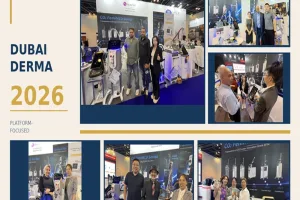
LaserTell has provided a case study of a dermatology clinic in Dubai that upgraded from traditional Q-switched lasers to the LaserTell Picosecond Laser System. According to the case information, the clinic achieved:
Actual clinical and business results may vary depending on factors such as treatment protocols, patient characteristics, market conditions, pricing models, and clinic management.
A: The number of sessions depends on factors such as tattoo color, ink density, pigment depth, tattoo age, and individual response. In many cases, picosecond laser treatments may require approximately 3–6 sessions, while traditional Q-switched laser treatments may require more sessions for certain tattoos.
A: Picosecond laser technology can be suitable for darker skin types when appropriate wavelengths and treatment parameters are selected. Its ultra-short pulse duration creates a primarily photomechanical effect, which helps reduce heat accumulation and may lower the risk of thermal-related concerns such as post-inflammatory hyperpigmentation (PIH).
A: Routine maintenance typically includes checking the cooling system, replacing distilled water according to manufacturer recommendations, and performing regular inspections of optical components. The LaserTell system uses a xenon lamp designed for a lifespan exceeding 5,000,000 shots, helping reduce the frequency of component replacement.
Selecting the right laser equipment requires more than comparing output power or price. Clinics should consider the complete system, including pulse duration, wavelength flexibility, beam quality, cooling performance, reliability, and long-term maintenance costs.
A professional Picosecond Laser Machine can help aesthetic clinics expand treatment options for tattoo removal, pigmentation management, and skin rejuvenation while improving workflow efficiency.
With multi-wavelength Nd:YAG technology, stable energy delivery, and clinic-oriented design features, the LaserTell Picosecond Laser System provides a comprehensive solution for clinics seeking a versatile and reliable laser platform. Contact LaserTell today to learn more about our picosecond laser solutions for professional aesthetic clinics.
 23Sep
23Sep
 18Sep
18Sep
 17Sep
17Sep