Laser Hair Removal Business Profitability: A Break-Even Guide
Laser hair removal business profitability depends on whether finished treatments generate enough contribution to cover the costs your model includes. Equipment alone cannot establish a...

An RF microneedle machine brings two proven technologies into one device. Ultra-fine needles create micro-channels in the skin, and radiofrequency energy travels through those needles into the dermis. The treatment firms, smooths, and rebuilds the skin in a single pass.
The idea is easy to confuse with ordinary microneedling. A microneedling machine that only pierces the skin relies on the body’s repair response: every tiny wound triggers collagen production. That works, but the effect is mostly mechanical. Radiofrequency adds heat. When the energy reaches the dermis, it contracts existing collagen fibers and stimulates fresh collagen and elastin. In short, RF turns a simple needling session into a deeper remodeling treatment.
Laser resurfacing works differently. It heats or removes the surface layer with light. That approach is very effective, yet it usually brings visible downtime and demands careful patient selection. RF microneedling sits between the two approaches: it reaches deep without stripping the outer layer, which is why downtime stays short.
Picture one pass. The handpiece presses fine needles into the skin, then radiofrequency energy flows from the needle tips into the dermis. Each heat zone is small and controlled, so the healthy tissue around every micro-channel stays intact. That is what fractional means: the energy treats fractions of the skin rather than the whole surface, so healing is faster.
Needle design changes everything. On a fractional RF microneedle machine, the needles are usually insulated. Only the tip emits energy, so the heat reaches the intended depth while the shaft protects the epidermis. Non-insulated needles release energy along the full shaft. They create more surface heat, which usually means more redness and a longer recovery.
Table 1. Insulated versus non-insulated needles
| Needle type | Where energy is released | Effect on the skin surface | Best suited to |
| Insulated (tip only) | At the intended dermal depth | Epidermis stays largely protected | Wrinkle reduction, acne scar work, darker skin types, shorter downtime |
| Non-insulated (full shaft) | Along the whole needle path | More surface heat, more redness | Broad remodeling when surface effects are acceptable |
Depth control matters just as much. Skin around the eyes is thin, while skin on the body is thick. A machine that lets the operator adjust penetration depth in small steps and set energy intensity independently can treat a wide range of areas and patients with the same handpiece.
Most clinics use the treatment for three groups of concerns. On the face, it targets fine lines, deeper wrinkles, enlarged pores, and acne scars. On the neck and body, it softens stretch marks and raised or sunken scars. For early laxity, an RF skin tightening machine of this type can produce visible firming, because the heat reaches the deeper dermis where the supporting tissue sits.
For wrinkle removal, the common protocol is three to four sessions spaced four to six weeks apart, followed by a maintenance treatment every six to twelve months. Most patients experience mild redness for one to three days. That short window is one reason clinics add the treatment to their menus: it fits into a lunch-hour appointment and does not block the schedule for days.
Once you understand what the treatment does, the buying decision narrows to four areas. These are the ones that shape patient outcomes, running costs, and staff training.
Most entry-level units ship with a single treatment handpiece. A premium unit pairs the RF handpiece with a cooling handle, so the clinic does not need to buy a separate device to manage pain. Many basic models offer one or two needle cartridges; broader platforms offer four, which lets one machine handle the face, the body, and non-invasive firming. Single-language software is still common, yet an international clinic saves real hours when the interface speaks the operator’s language.
These differences rarely appear in a photo, but they show up in daily use.
Certifications are easy to overlook in a medical device purchase, yet they deserve more attention than most buyers give them. CE marking is the baseline in Europe, but it is worth checking which framework the device was assessed under. Devices assessed under the EU Medical Device Regulation (MDR) 2017/745, which replaced the older MDD directive, have been through a stricter and more recent review. That difference says a lot about the manufacturer’s approach.
A second signal is the quality system behind the factory. ISO 13485:2016 is the recognized quality management standard for medical devices. A factory-level certificate shows that the company treats design control, production, and traceability as routine practice rather than an exception.
For clinics serving US patients, FDA 510(k) clearance is the relevant marker. Not every manufacturer holds it, so it is reasonable to ask for it directly; either way, the answer tells you something useful.
With those criteria in mind, one device that follows the checklist in practice is the Desktop Gold Microneedling RF Machine from LaserTell, a manufacturer focused on medical-grade aesthetic equipment. It is built around four ideas.
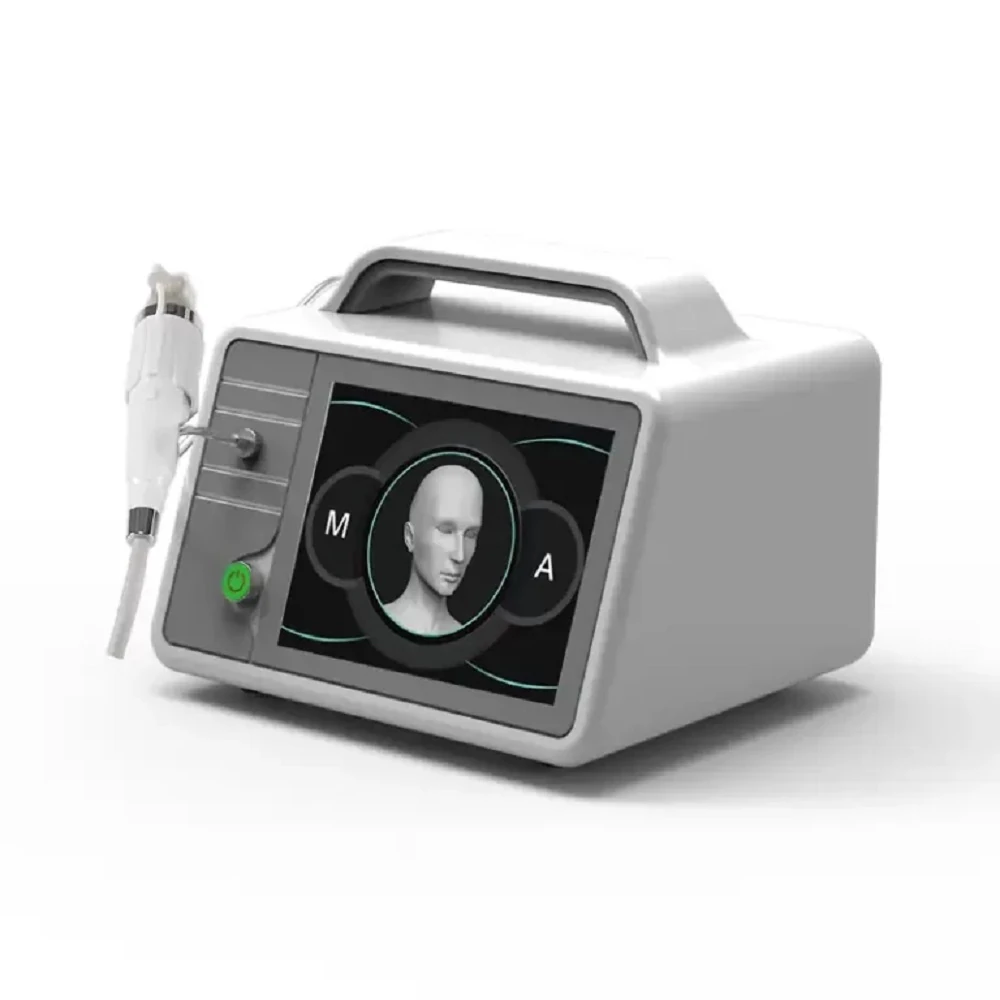
The Micro RF works with four sterilized, single-use cartridges. A 64-pin cartridge handles the body, and a 25-pin cartridge suits the face. A 10-pin cartridge reaches tight areas such as the eye area and the sides of the nose, while a nano chip performs non-invasive firming and product infusion. Instead of buying a separate device for each zone, a clinic swaps the head and continues.
Table 2. Cartridge selection guide
| Cartridge | Best for | Typical uses |
| 64-pin | Body | Stretch marks, body scars, laxity on larger areas |
| 25-pin | Face | Fine lines, enlarged pores, acne scars, overall texture |
| 10-pin | Delicate zones | Eye area, sides of the nose, small uneven areas |
| Nano chip | Non-invasive work | Skin firming, product infusion without piercing |
Pain is the most common reason patients hesitate, and most single-handle machines leave cooling to the clinic. The Micro RF ships with two handles: the RF microneedle handpiece and a cold hammer that cools the skin before and after each pass. Pre-cooling raises the pain threshold; post-cooling calms the treated area. Together, the two steps keep sessions comfortable without an extra cooling purchase.
The eye area and the neck are curved, so needles can slip on uneven skin. The vacuum-suction probe applies gentle negative pressure that lifts and holds the skin, so penetration depth stays consistent from one spot to the next and RF energy is delivered evenly. For the operator, that translates into fewer skipped spots and more predictable results.
Training a new operator is a real cost. The Micro RF runs on a multi-language touchscreen, so clinics can set the interface to the language their staff actually uses. The redesigned needle handle uses a smoother drive mechanism, which reduces mechanical drag on the skin and makes each pass steadier. Staff notice that detail over a full day of treatments.
Consider a mid-sized aesthetic clinic that previously juggled a basic microneedling device and topical-only RF treatments. Clients complained about pain, and results for acne scars and wrinkles came slowly. Because two devices were involved, staff had to master two workflows, and the clinic paid twice for training and maintenance. After switching to the Desktop Gold Microneedling RF Machine, the picture changed. One platform covered wrinkle removal, skin tightening, and acne scar work. The cold hammer made sessions noticeably more comfortable, and the single multi-language interface meant one workflow instead of two. The clinic now offers a broader menu with the same headcount.
The Micro RF is a desktop device built for standard air-conditioned treatment rooms. Keep the unit away from direct sunlight, dust, and splashing liquids. Leave clearance around the vents during long sessions, and store cartridges sealed until use, since they are single-use and must not be reused. In humid climates, simply keep the room dehumidified and the handpiece connections dry.
Two more details are worth checking before you buy. The device is produced under an ISO 13485:2016 quality system and carries CE marking under the EU MDR 2017/745 framework. The needle-handle engineering is proprietary to LaserTell, and patent documentation is available on request.
Fine lines and wrinkles, skin laxity, acne scars, enlarged pores, and uneven texture on the face, neck, and body.
Topical anesthetic is normally applied. Devices with a cooling step, such as the cold hammer on the LaserTell Micro RF, further improve comfort during and after the treatment.
Most clinics plan three to four sessions spaced four to six weeks apart for wrinkle removal and acne scar revision, with maintenance sessions afterward.
Pregnant women, people with active skin infections, metal implants in the treatment area, or a history of keloid scarring should consult a physician first.
No. Sterilized disposable cartridges are single-use, for hygiene and for consistent RF energy delivery.
Choosing an RF microneedle machine comes down to a handful of decisions: how precisely it controls depth and energy, how many cartridges it offers and what they cost, how it manages comfort, and which standards stand behind it. Clinics that weigh these points before signing a purchase order usually end up with a device that earns its place day after day, serving several indications from one machine and keeping patients coming back.
If you are evaluating an RF microneedle machine for your clinic, contact LaserTell for a quotation, technical documentation, or OEM options.
 22Oct
 21Oct
 20Oct
 19Oct