How a Body Slimming Machine Works: Heat, Vacuum and Ultrasound Explained
Key Takeaways What a Body Slimming Machine Actually Does If you ask a practitioner what body contouring means, the answer may surprise you: nobody is...

A useful fractional CO2 laser vs non ablative laser comparison starts with the exact treatment mode and clinical question. Fractional treatment can be ablative or non-ablative, so the labels alone do not establish which system best fits a clinic’s needs.
A proposal may promise strong results while another emphasizes recovery. Those claims are hard to compare unless both define the outcome, patient group, and equipment involved. If you are reviewing a purchase, this guide helps you turn broad claims into an evidence review, a workflow plan, and a clear document request.
Key Takeaways
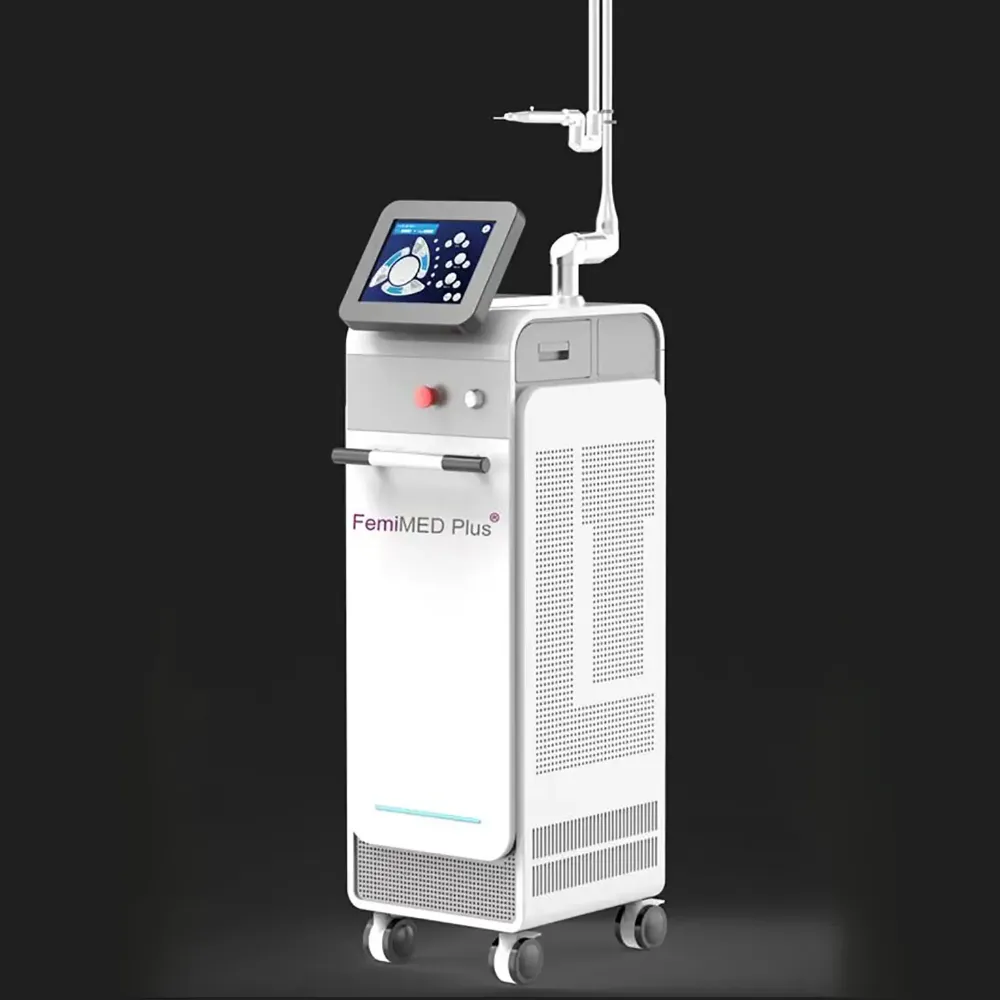
Fractional describes a treatment pattern that targets parts of an area with tissue between the treated sites. Ablative and non-ablative describe a different aspect of treatment: whether the intended effect includes removing treated tissue. These are two ways to classify a procedure, rather than opposite ends of one scale.
For fractional CO2 laser vs non ablative laser, identify both features of the proposed treatment. Ask what the device is, how it delivers energy, and which mode is being discussed. A product name that includes “fractional” does not answer all three questions.
Penn Medicine’s explanation of laser resurfacing explicitly distinguishes ablative, non-ablative, and fractional approaches. It notes that fractional systems can be ablative or non-ablative. Use that distinction to organize your shortlist, then obtain the specific model’s documents.
In fractional CO2 laser vs non ablative laser, name the exact non-ablative system. In this article, the research examples concern non-ablative fractional systems, including erbium-glass, compared with fractional ablative CO2. They do not represent every non-ablative wavelength or indication.
| Question | Fractional CO2 Proposal | Non-Ablative Proposal |
|---|---|---|
| Which model? | Record exact identity | Record exact identity |
| Which mode? | Confirm the quoted delivery mode | Confirm fractional or other delivery |
| Which use? | Identify the intended clinical question | Identify the same question |
| Which evidence? | Record matching research and limits | Record matching research and limits |
Do not treat IPL or radiofrequency as interchangeable laser comparators. IPL is a light-based technology rather than a laser, and radiofrequency is a different energy modality. Er:YAG is also not a synonym for non-ablative treatment; the exact mode matters.
Illustrative scenario: A buyer creates two columns labeled “fractional” and “non-ablative.” The clinical reviewer points out that one proposed non-ablative system is also fractional. The buyer revises the table to list device identity, mode, and intended use separately.
If you are considering LaserTell fractional CO2 laser systems, prepare those fields before requesting configuration details. A defined comparison makes the supplier’s response easier for your clinical team to assess.
For fractional CO2 laser vs non ablative laser, begin each evidence row with the condition studied. A paper about atrophic acne scars answers a different question from one about a surgical scar. Do not merge their findings into a single effectiveness score.
An Egyptian comparison published in 2018 studied fractional ablative CO2 and non-ablative fractional 1,540 nm erbium-glass for atrophic acne scars. It enrolled 58 patients in two groups of 29 and included three months of follow-up. Reported between-group differences in improvement and satisfaction were not statistically significant, with P values of 0.1 and 0.44 respectively.
That finding does not prove that the treatments are equivalent. It also does not establish one as superior. Keep the population, comparator, outcomes, and follow-up attached to the result rather than converting it into a general buying rule.
In a fractional CO2 laser vs non ablative laser review, ask the clinician to examine how scars were assessed and which patients were included. Then identify the questions the study leaves open. Evidence from a specific research device is not automatic validation of every platform using a similar source.
A 2020 randomized, blinded split-scar study enrolled 100 patients with surgical or traumatic scars. Its abstract reports no significant evidence of superiority between the laser groups in patient or blinded observer scores. Patients reported improvement, while the authors’ conclusion states that objective evaluation did not identify improvement in scar appearance; pain was worse after ablative treatment under the study conditions.
The paper’s title identifies a 1,550 nm non-ablative comparator, while its abstract objective prints 1,500 nm. Resolve that discrepancy from the full report before making a device-specific claim. It does not prevent noting the study’s broader design and the distinction between patient and observer outcomes.
For fractional CO2 laser vs non ablative laser, read those outcomes as separate measures. Patient satisfaction can be relevant to a service, but it does not replace an observer’s assessment. Likewise, no significant group difference is not proof that two treatments are interchangeable.
Illustrative scenario: A purchasing team places a surgical-scar trial beside an acne-scar trial and begins ranking the devices. The reviewer separates the studies by indication and outcome. The team records the limits before discussing which evidence fits its intended service.
In fractional CO2 laser vs non ablative laser, “downtime” needs a definition. Ask whether it means surface healing, visible redness, return to work, or a patient’s willingness to attend a social event. Those endpoints can answer different questions.
For fractional CO2 laser vs non ablative laser, ask who measured recovery and when. Was it a patient report or a clinical check? Keep the source beside the claim.
Use a table that preserves the distinctions:
| Measure | Question for the Clinical Reviewer |
|---|---|
| Healing | What clinical endpoint was assessed? |
| Redness or swelling | How was it measured and followed? |
| Return to work | Was this patient-reported, and how was work defined? |
| Pain | When and how was the score collected? |
| Adverse events | Which events were monitored, and for how long? |
Avoid giving every device in a category the same number of recovery days. The intended procedure, patient assessment, and model instructions belong in that discussion. A treatment schedule from a research paper is not a ready-made protocol for your clinic.
For fractional CO2 laser vs non ablative laser, a recovery claim should not stand in for a safety assessment. A shorter reported period away from work does not establish that every adverse-event risk is lower. Ask which risks the evidence actually evaluated.
Have the clinical reviewer consider the study population and whether it represents the patients the clinic expects to treat. Do not turn a broad category label into a promise about all skin types. Questions about pigmentation changes, scarring, and individual suitability need clinical judgment.
Keep absence of a reported event separate from proof that it cannot occur. A study can leave important questions unanswered, particularly when follow-up or sample size is limited. Mark those gaps instead of filling them with a confident statement.
In your fractional CO2 laser vs non ablative laser file, use separate fields for recovery, pain, and adverse events. This makes it harder for a convenient recovery headline to hide an unanswered risk question.
Define the service the clinic wants to provide before selecting a platform. Ask the clinical lead which evidence is relevant and what training the team needs. Then check the intended-use documentation for the specific model and destination market.
A fractional CO2 laser vs non ablative laser workflow review should distinguish equipment training from clinical competence. Ask what the supplier’s training covers, who teaches it, which staff roles it addresses, and what reference materials remain with the clinic. Do not assume one session covers every aspect of patient selection and treatment.
Include staff handover in fractional CO2 laser vs non ablative laser. Who trains new staff? Where are the current instructions? Name the contacts for equipment and clinical questions.
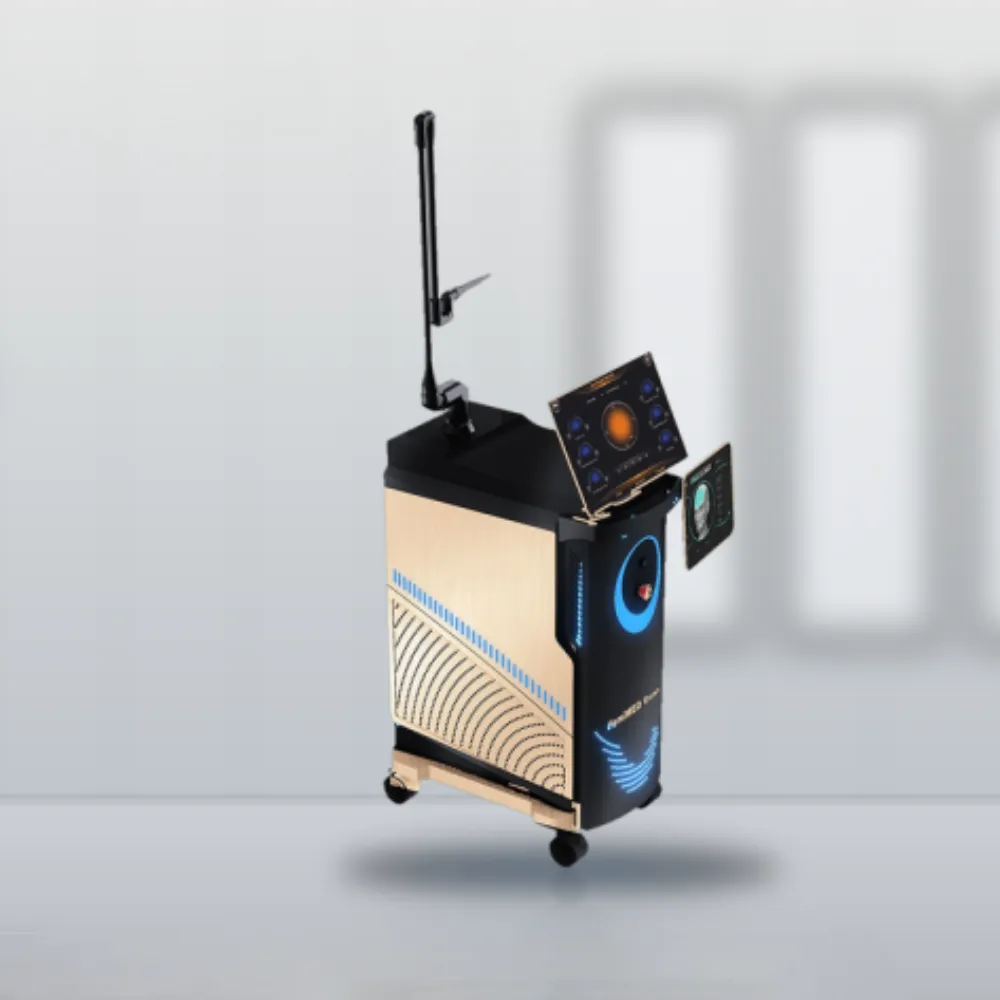
The FemiMED NEO model information is one starting point for a LaserTell configuration request. It does not establish that the model was used in the cited studies or prove a clinical advantage over a non-ablative device.
Ask each supplier for installation requirements and the instructions that apply to the quoted accessories. Have the relevant facility staff review those requirements. Do not assume that a room already used for one platform automatically meets another system’s needs.
For fractional CO2 laser vs non ablative laser, include the questions that affect day-to-day work. Which cleaning information applies to each component? What controls and protective measures does the manufacturer specify? What documentation is needed for maintenance and service?
The clinical team should also decide how evidence and uncertainty will be explained to patients. Avoid building a service around fixed recovery promises taken from a generic comparison. Ensure that the consultation process supports individual assessment.
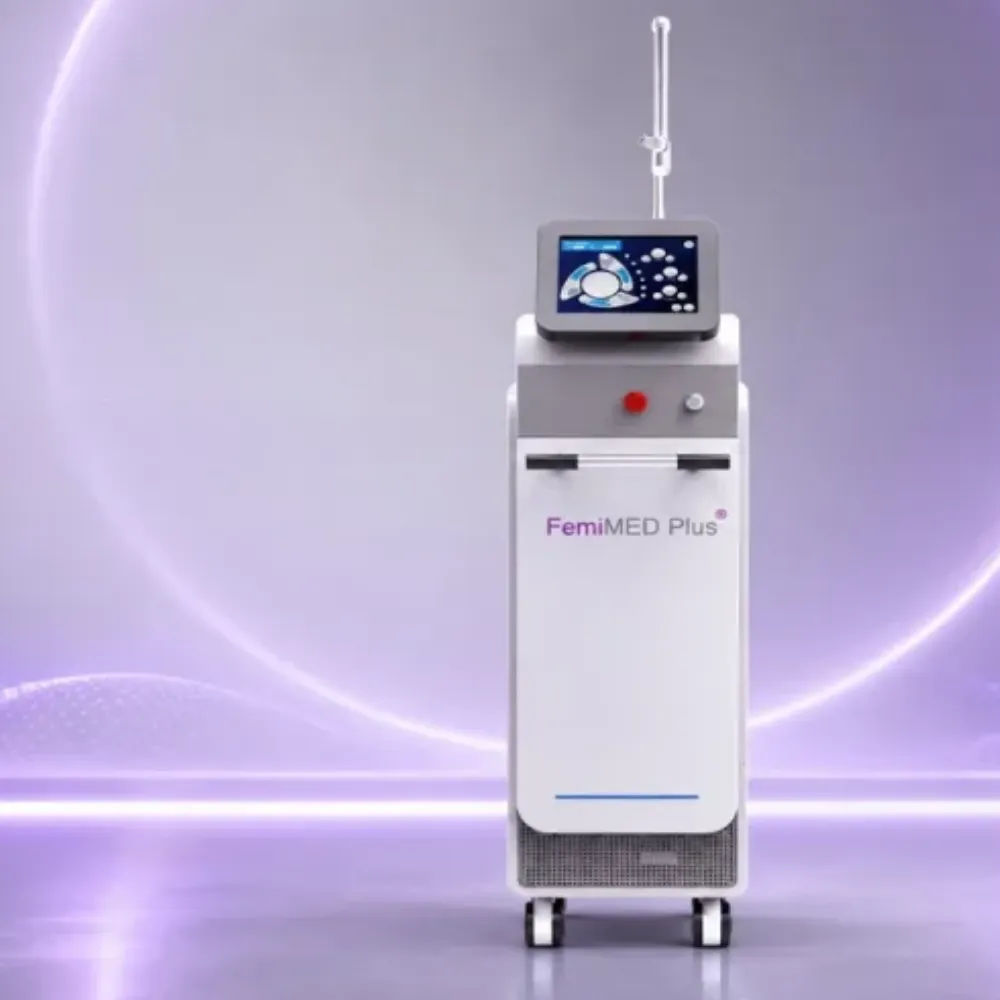
The commercial side of fractional CO2 laser vs non ablative laser starts with an itemized offer. List the model, included accessories, training, and support. Ask suppliers to identify optional items so that two totals are not compared on different assumptions.
Use the same questions for each proposal:
These are purchasing questions, not a statement that every device requires the same items. Ask the supplier to mark what applies to the proposed configuration and what does not. Keep unresolved items open until the answer is documented.
For fractional CO2 laser vs non ablative laser, distinguish a confirmed inclusion from a possible option. A verbal assurance may be useful in discussion, but the final comparison needs a clear written scope. Keep the quote date and validity period with the file.
Budget fractional CO2 laser vs non ablative laser from written quotes and model care rules. Record pack sizes, replacement rules, and the budget period. Don’t fill gaps with an unsupported average.
Do not assume that one technology always costs less to maintain or produces more revenue. The configuration, local service arrangements, clinical scope, and actual demand need their own evidence. Keep those business assumptions separate from clinical trial results.
Illustrative scenario: A clinic receives two proposals, but only one includes training and service travel in the total. The buyer asks for matching scope before comparing prices. The example does not assume a cost saving, better outcome, or faster return on investment.
A fractional CO2 laser vs non ablative laser budget should show where each figure came from. This lets the team update the estimate when a quote or service term changes without rebuilding the whole comparison from memory.
Give the clinical reviewer the intended indication, proposed mode, and relevant evidence. Ask which findings apply to the clinic’s question and which do not. Keep the review focused on the actual service under consideration.
For fractional CO2 laser vs non ablative laser, record the following before approving a clinical comparison:
This evidence sheet supports a purchasing discussion; it does not replace individual patient assessment. Keep the responsibility for clinical selection with the appropriate professional. A shortlist should not become a treatment protocol by default.
Ask for the exact model, intended-use documents, current instructions, accessory references, training scope, and support terms. Tie the response to the destination market and quoted configuration. Avoid treating a general company certificate as proof of every model-specific claim.
In fractional CO2 laser vs non ablative laser, keep product documents and published clinical evidence in separate sections. Each serves a different purpose. A paper cannot replace the model’s instructions, and a brochure cannot establish every clinical conclusion.
Before deciding on fractional CO2 laser vs non ablative laser, assign each open question. Ask the clinical, facilities, and buying teams to review their parts. Record what’s confirmed and what’s still open.
Yes. Fractional describes the treatment pattern, while non-ablative describes a tissue-effect category. A non-ablative fractional system can therefore appear on one side of a comparison with fractional ablative CO2. Confirm the exact model and mode rather than treating the words as mutually exclusive choices.
That conclusion does not follow from the label alone. Ask which adverse events were studied, in which patients, and under what conditions. A clinical reviewer should assess suitability and risk for the proposed use. Avoid turning a recovery claim into a promise of universal safety.
Review evidence for the same scar problem and specific treatment mode. The study summarized here did not establish a statistically significant group difference, which does not prove equivalence. For fractional CO2 laser vs non ablative laser, keep research limits and individual clinical assessment attached to the decision.
Do not make that promise from the category name. Ask what recovery measure is being described and whether it comes from a study, a model document, or a general service summary. The clinician should explain expectations for the proposed procedure and patient rather than use a universal number.
Request model identity, treatment mode, intended-use documents, current instructions, accessories, training, and written support terms. Add an evidence sheet that separates indications and outcome measures. Use confirmed scope and documented assumptions when comparing the offers, and keep unanswered questions visible until they are resolved.
Use fractional CO2 laser vs non ablative laser to organize the evidence, workflow, and purchasing questions for your clinic. If you are considering a LaserTell CO2 platform, request model-specific configuration details and list the documents your team needs. Confirm the proposal’s scope before comparing it with a different laser system.
 13Nov
 13Nov
 12Nov
 11Nov