How a Body Slimming Machine Works: Heat, Vacuum and Ultrasound Explained
Key Takeaways What a Body Slimming Machine Actually Does If you ask a practitioner what body contouring means, the answer may surprise you: nobody is...

To compare fractional CO2 laser vs erbium laser, first identify the erbium technology and treatment mode. Fractional Er:YAG resurfacing and non-ablative erbium-glass are different comparisons, so neither a broad technology label nor one study establishes a universal winner.
A quote that says only “fractional erbium” leaves a basic question open: what system is being offered? If you are choosing equipment for a clinic, that gap affects how you read evidence, discuss recovery, and compare support. This guide gives you a way to sort those questions before you judge the proposal.
Key Takeaways
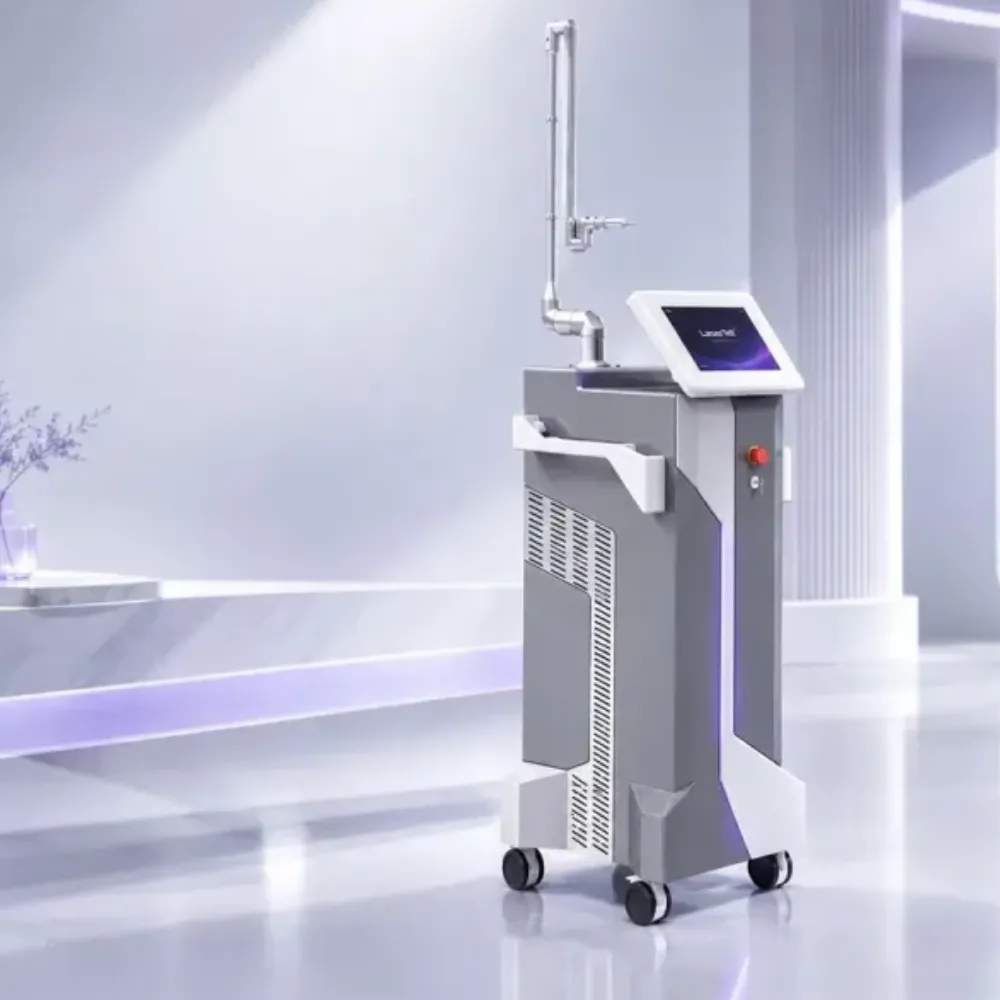
“Fractional” does not identify one laser source. It describes treatment delivered in a pattern that leaves areas between treated sites. The clinical study discussed below describes this principle as creating treatment zones with intervening tissue; it compares two different fractional technologies.
For a fractional CO2 laser vs erbium laser review, put the source and mode in separate fields. Ask for the wavelength, exact model, handpiece, and whether the proposed use is ablative or non-ablative. A shared word in two product names does not make the treatment modes equivalent.
For fractional CO2 laser vs erbium laser, look beyond the treatment brand name. Ask which platform and setup the quote covers. Keep the answer with your file.
Er:YAG and erbium-glass should not be merged into one evidence category. Fotona’s manufacturer brochure describing Er:YAG identifies a 2,940 nm source and skin-ablation capability. That establishes a technology example, not a claim about every operating mode or another manufacturer’s device.
By contrast, the published erbium-glass study below evaluates a non-ablative 1,540 nm system against an ablative fractional 10,600 nm CO2 system. It is not an Er:YAG trial.
| Comparison Label | Identity to Confirm | Evidence Question |
|---|---|---|
| Fractional CO2 | Exact source, model, and delivery mode | Does the research match the proposed use? |
| Fractional Er:YAG | Exact model and ablative or other mode | Is the comparator actually Er:YAG? |
| Fractional erbium-glass | Wavelength, model, and mode | Is non-ablative evidence being kept separate? |
Illustrative scenario: A clinic receives a quote labeled “erbium fractional.” The buyer asks for the source, wavelength, and operating mode before adding it to the shortlist. The missing identity is resolved before any comparison of results or recovery begins.
If you are reviewing LaserTell fractional CO2 laser systems, use the catalog to prepare a model-specific request. Ask which configuration and supporting documents apply to the system you are considering.
A useful fractional CO2 laser vs erbium laser evidence review starts with the clinical question. Is the study about atrophic acne scars, wrinkles, or another condition? Identify the patient group and treatment mode before looking for a headline result.
One randomized comparison of fractional Er:YAG and CO2 in Asian acne-scar patients enrolled 24 subjects and used a split-face design. The indexed methods identify that direct comparison. Its sample and design do not, on their own, establish the best platform for every patient population or indication.
When assessing such a study, ask your clinical reviewer to examine the full methods and results. Which outcomes were measured, who assessed them, and how long did follow-up last? If only an abstract is available, mark the missing details rather than filling them from another article.
For fractional CO2 laser vs erbium laser, keep the device name with each study. A similar source name doesn’t prove that another machine gives the same result.
An Egyptian study published in 2018 compared fractional ablative CO2 with non-ablative fractional erbium-glass for atrophic acne scars. It included 58 patients, divided into two groups of 29, with three months of follow-up. The reported between-group differences in improvement and satisfaction were not statistically significant, with P values of 0.1 and 0.44 respectively.
Those findings do not prove that the technologies are equivalent. They also do not support describing the CO2 arm as having established superiority. Most importantly for this comparison, the erbium arm was erbium-glass, not Er:YAG.
For fractional CO2 laser vs erbium laser, record the comparator before you copy a result into a table. A clear evidence sheet can use these fields:
Illustrative scenario: A buyer places two papers in an “erbium evidence” folder. A review shows that one concerns Er:YAG and the other erbium-glass. The team separates them before discussing the clinical scope of either purchase; no treatment outcome is assumed.
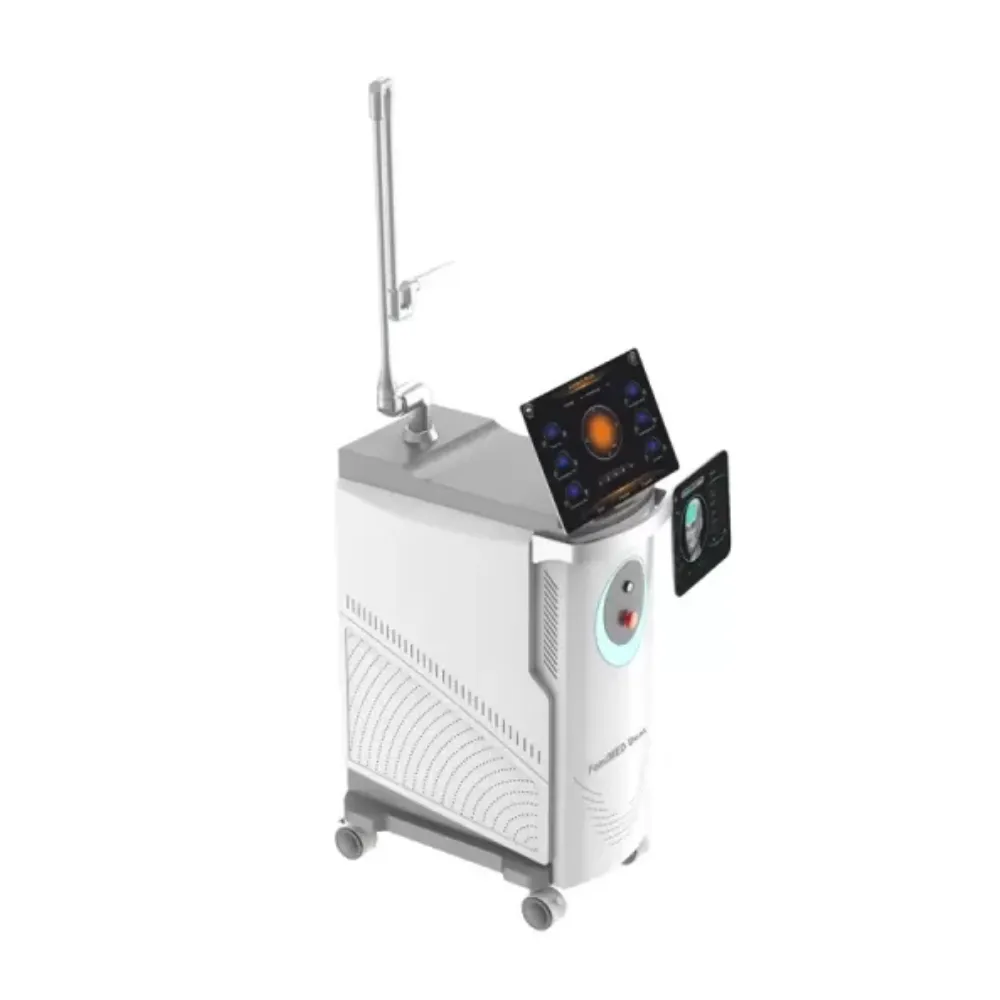
In a fractional CO2 laser vs erbium laser discussion, “shorter downtime” needs a definition. Ask whether the source is describing visible redness, surface healing, return to work, or willingness to attend social events. Record the actual endpoint used.
In fractional CO2 laser vs erbium laser, check who measured recovery. Patient reports and clinical skin checks answer different questions. Don’t merge them into one claim.
Avoid turning a study schedule into a clinic-wide recovery promise. The treating clinician needs to assess the patient, intended procedure, and relevant device instructions. Equipment buyers can ask for evidence; they should not create a universal number of recovery days from a category label.
This keeps the fractional CO2 laser vs erbium laser review focused on what the evidence actually says. If the endpoint is not defined in the material you have, list it as an unanswered question for the clinical reviewer.
Ask which skin types and conditions were represented in the supporting research. A study involving one group does not establish the same risk profile for every patient. Clinical selection requires more than matching a laser name to a skin-type label.
Be careful with absolute statements such as “erbium is always safe for dark skin” or “CO2 is always unsuitable.” Neither follows from the limited comparative evidence summarized here. Questions about pigmentation change, scarring, and suitability belong with the clinician reviewing the particular use.
For fractional CO2 laser vs erbium laser, keep recovery and adverse events in separate columns. A shorter reported recovery measure does not establish that every type of risk is lower. Ask what was monitored and for how long.
Also separate absence of a reported event from proof that the event cannot occur. A small study may leave important questions open. The useful purchasing action is to identify those limits and obtain a clinical review, rather than replace uncertainty with a confident marketing claim.
Start with the service your clinic intends to provide and the clinical team responsible for it. Then ask whether the proposed model’s documentation supports that use in your market. Keep that review separate from a supplier’s broad list of possible applications.
A fractional CO2 laser vs erbium laser shortlist should include the exact device identity, intended use, available modes, and relevant instructions. Ask the clinician to identify which evidence is relevant to that configuration. Any remaining question should stay visible in the decision file.
Do not use wavelength or rated power as a standalone ranking of treatment quality. Those specifications help identify and describe the equipment, but a clinical comparison needs the full treatment context. Ask what the figure measures and which configuration it refers to.
When reviewing a named LaserTell platform, the FemiMED NEO model information provides a starting point for a document request. It does not show that the platform was used in the cited trials or establish superiority over an erbium device.
Ask who provides training, what the course covers, and which staff roles it addresses. Separate equipment familiarization from the clinical judgment needed to select and treat patients. Request the supporting materials that remain with the clinic.
For fractional CO2 laser vs erbium laser, also compare the quoted accessories by part reference. Which handpieces, scanners, tips, or other items are included? Ask which instructions apply to each and whether additional items are needed for the intended configuration.
Use the model’s current instructions and the appropriate training for the equipment actually purchased. A general educational video cannot replace either.
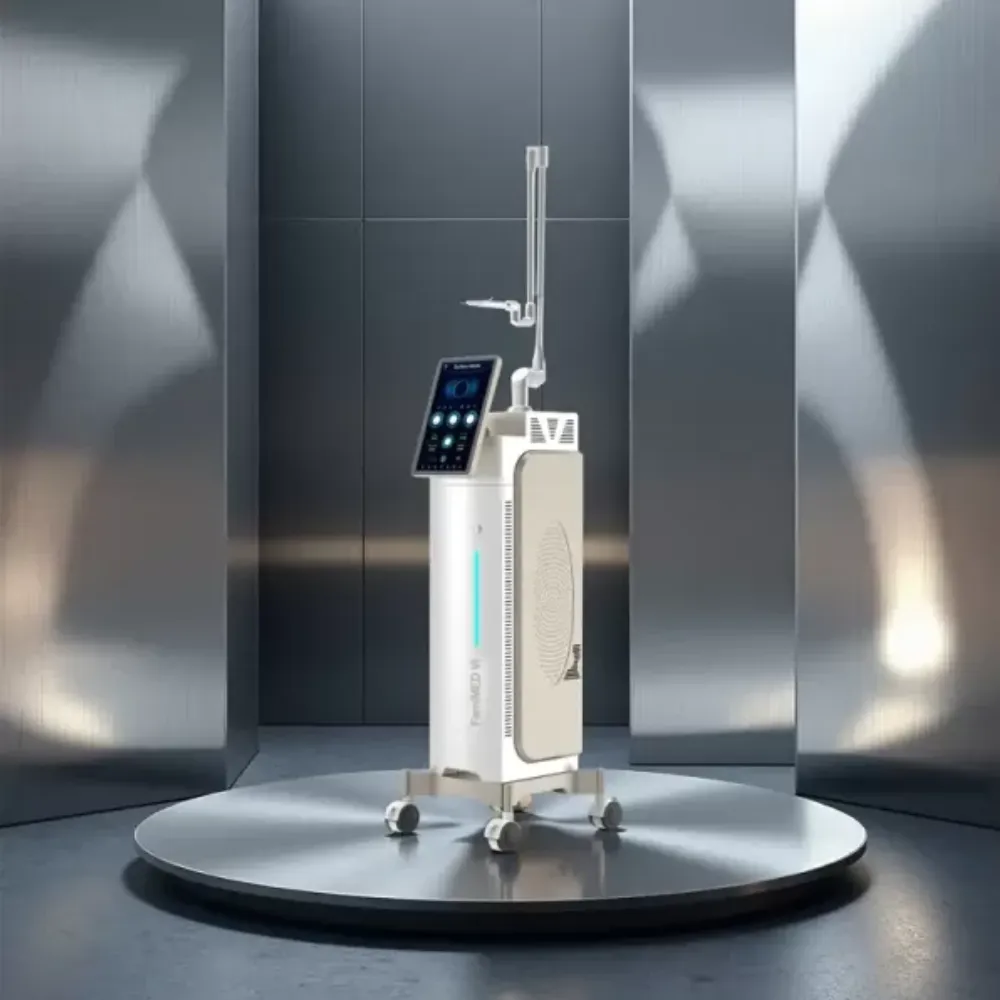
The commercial part of fractional CO2 laser vs erbium laser starts with an itemized quote. Ask each supplier to identify the unit, accessories, training, and support being offered. Compare matching scopes rather than two headline prices with different inclusions.
| Quote Area | Information to Request |
|---|---|
| System | Model, source, modes, and destination-market documents |
| Accessories | Included items and part references |
| Training | Scope, provider, materials, and any additional fees |
| Consumables | Required items, pack sizes, and ordering route |
| Service | Covered work, parts, travel, and exclusions |
| Warranty | Written conditions and claim process |
Treat these as proposed purchasing questions. They are not a statement that every product has the same requirements or that each supplier includes the same services.
For fractional CO2 laser vs erbium laser, clarify which information is documented and which remains a sales estimate. Ask for written answers on unresolved items before making a final comparison. Keep the date and scope of each quote with the file.
Ask for the installation requirements for each proposed system. Have the responsible facility staff review them rather than assuming that an existing room suits a different platform. Keep the requirements tied to the exact configuration.
Include maintenance in fractional CO2 laser vs erbium laser. Ask for staff care tasks, service rules, and parts information. The source name alone isn’t a service plan.
An ownership review of fractional CO2 laser vs erbium laser should use actual prices and stated assumptions. Where a service cost or replacement interval is unknown, leave it open. Do not invent an industry average or assume that one technology will always cost less to run.
Illustrative scenario: A clinic compares two proposals but finds that only one lists training and service travel. The buyer requests matching scope details before comparing totals. This example does not assume that either system delivers better outcomes or a financial saving.
Give the clinical reviewer a clear evidence file, not just a product brochure. Identify the comparison being proposed and the uncertainties that remain. This makes it easier to focus the discussion on the clinic’s intended scope.
Your fractional CO2 laser vs erbium laser review can ask:
Record the answers without turning them into a patient treatment plan. A purchase discussion and an individual clinical assessment serve different purposes. Keep both under the appropriate professional responsibility.
Ask the supplier to connect the offer to a specific model and document set. Request the current instructions, accessory list, training scope, and service terms. Keep any regulatory documents tied to the actual device and destination market.
In a fractional CO2 laser vs erbium laser comparison, use separate fields for clinical evidence and product documentation. A published study does not replace model-specific documentation. Likewise, a device document does not prove every clinical claim in a sales presentation.
Before approval, review open questions with the clinical, equipment, and buying teams. Name an owner for each one. A missing answer isn’t a yes.
No. Erbium-glass and Er:YAG should not be treated as the same technology. Er:YAG platforms can provide ablative resurfacing, while the 1,540 nm erbium-glass study discussed here used a non-ablative system. Confirm the exact model and mode rather than deciding from the word “erbium.”
No. Fractional describes the pattern of treatment, not a single source. Both CO2 and erbium-based systems appear in fractional resurfacing research. For fractional CO2 laser vs erbium laser, identify the source and operating mode separately so that the comparison concerns the equipment actually being considered.
There is no universal answer from a technology label alone. Review studies for the same scar problem and keep Er:YAG separate from erbium-glass. The clinician should assess the evidence, patient population, and intended procedure. Results from one research platform do not establish the performance of every similar device.
Not necessarily. Ask how downtime was defined and which adverse events were monitored. A difference in one recovery measure does not establish that every risk is lower. Keep the outcome, follow-up, and clinical context attached to the claim rather than converting it into an absolute safety statement.
Request the exact model, source, mode, current instructions, intended-use documents, accessory list, training, and written support terms. For fractional CO2 laser vs erbium laser, add an evidence sheet showing which studies apply to each technology and what questions remain for the clinical reviewer.
Use fractional CO2 laser vs erbium laser to frame a clear question about technology, evidence, and clinic needs. If you are considering a LaserTell CO2 platform, request model-specific documentation and name the configuration you want to review. Confirm the offer’s scope before comparing it with a different laser category.
 13Nov
 13Nov
 12Nov
 11Nov