How Cryolipolysis Works and What to Look for in a Fat Freezing Machine
If you run an aesthetic clinic, a medical spa, or a body-contouring studio, you have watched demand for non-surgical fat reduction grow. Clients want visible...

Light-based hair removal technology has become a key investment area for many aesthetic clinics looking to expand treatment options and improve operational efficiency. While DPL (Dynamic Pulse Light) and SHR (Super Hair Removal) both provide effective hair reduction solutions, they differ in energy delivery, treatment approach, patient comfort, and workflow requirements.
Understanding these differences allows clinic owners and practitioners to make more informed equipment decisions based on their patient demographics, service needs, and long-term business objectives. This article compares DPL and SHR across key performance factors and examines how integrated multifunctional platforms are helping modern aesthetic clinics improve treatment flexibility and operational efficiency.
DPL (Dynamic Pulse Light) is an advanced narrow-spectrum IPL technology that uses optimized wavelength filters to deliver more selective light energy. For hair removal applications, DPL systems typically utilize near-infrared wavelength ranges designed to improve melanin absorption and follicle targeting. Compared with conventional IPL, DPL delivers more precise selective photothermolysis, making it particularly effective for fine hair while also supporting skin rejuvenation, pigmentation correction, and vascular treatments through interchangeable filters.
SHR (Super Hair Removal) delivers energy differently. Instead of using high-fluence single pulses, an shr hair removal machine applies multiple low-energy pulses at a high repetition rate while the handpiece continuously glides across the skin. Heat gradually accumulates inside the hair follicle until it reaches the therapeutic temperature, while the epidermis remains relatively cool. This in-motion technique improves treatment comfort and makes SHR especially suitable for large treatment areas and patients seeking a gentler hair removal experience.
The primary difference lies in how heat is delivered. DPL uses concentrated narrowband light to rapidly heat melanin and destroy the follicle through selective photothermolysis. SHR relies on cumulative heating, gradually raising follicle temperature with repeated low-energy pulses during continuous movement. As a result, DPL emphasizes precision and energy efficiency, while SHR prioritizes comfort and a wider treatment safety margin.
DPL achieves high precision by filtering light into narrow wavelength bands. For hair removal, a dpl hair removal machine commonly operates within 650–950 nm, concentrating more energy on melanin while reducing unnecessary wavelengths. SHR typically uses a broader spectrum, such as 640–950 nm, combined with low-fluence rapid pulsing. Although this broad-spectrum approach is less selective, it provides greater treatment tolerance for a wider range of skin types. For advanced laser hair removal, DPL offers better spectral precision, while SHR focuses on comfortable energy delivery.
Both technologies effectively reduce unwanted hair, but they perform differently across clinical situations. DPL generally delivers faster results on fair skin with dark or fine hair due to higher melanin absorption, while SHR’s gradual heating approach offers a wider treatment margin for darker skin types when proper parameters and cooling systems are used. Advanced cooling in modern DPL systems has also narrowed this safety gap, giving clinics greater flexibility in treatment selection.
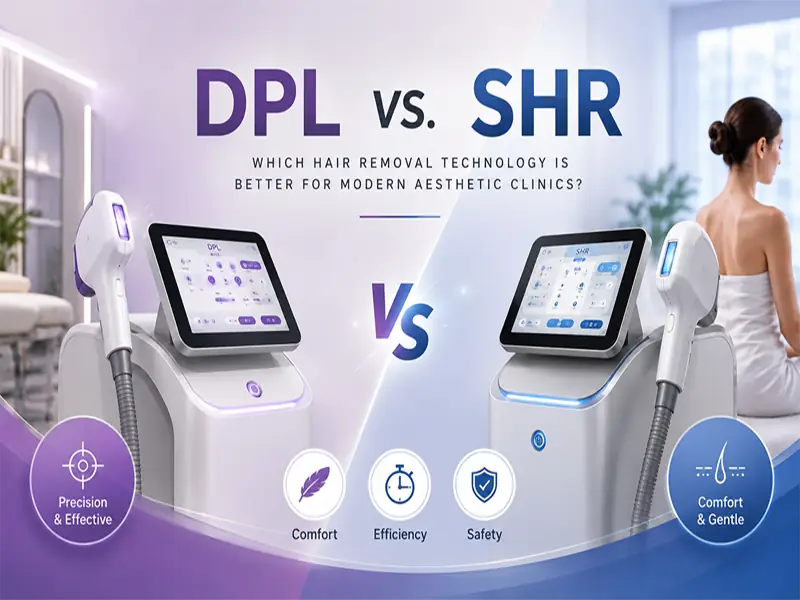
Patient comfort is one of SHR’s strongest advantages. Continuous movement combined with rapid low-energy pulses produces only a mild warming sensation for most patients. Traditional high-energy IPL treatments were often less comfortable, but modern dpl hair removal machines have greatly improved the patient experience through sapphire contact cooling systems capable of maintaining skin temperatures as low as -3°C before, during, and after treatment. As a result, the comfort difference between today’s premium DPL systems and SHR devices has become much smaller.
SHR introduced continuous in-motion treatment that dramatically improved efficiency compared with conventional stamping techniques. Today, however, many advanced DPL platforms also support high-frequency treatment modes of up to 10 Hz, allowing rapid continuous scanning similar to SHR. Consequently, treatment speed now depends less on the technology itself and more on factors such as repetition rate, spot size, cooling performance, and system design.
Long-term operating costs are an important consideration for every clinic. Both SHR and DPL systems use xenon lamps with limited service lives, but advanced DPL platforms designed for high-volume clinics can extend lamp life to 900,000 valid shots or more. Features such as detachable circulating water tanks also simplify maintenance, reduce scale buildup, and improve cooling efficiency, helping lower operating costs over the equipment’s lifespan.
An shr hair removal machine is ideal for clinics that prioritize patient comfort, fast treatment of large body areas, and straightforward operation. It is particularly suitable for treating darker skin types and first-time patients who prefer a gentler treatment experience. The gradual heating approach also provides a wider safety margin during routine clinical use.
A dpl hair removal machine excels when higher energy density and treatment precision are required. It often produces better results on fine or light-colored hair and performs especially well on fair skin. In addition to hair removal, DPL can also address vascular lesions, pigmentation, acne, and skin rejuvenation through dedicated narrow-spectrum filters, giving clinics greater treatment versatility.
Rather than choosing between DPL and SHR, many clinics now prefer integrated platforms that combine diode laser technology with multifunctional DPL treatment. Such systems deliver fast hair removal while supporting pigmentation correction, vascular therapy, acne treatment, and skin rejuvenation within one device. This approach reduces equipment investment, saves clinic space, simplifies maintenance, and enables practitioners to customize treatments according to individual patient needs.
Modern aesthetic patients often seek more than permanent hair reduction. Many also want to improve pigmentation, vascular lesions, acne, redness, or early signs of aging during the same treatment journey. As a result, clinics increasingly prefer a pigmentation removal machine that can perform multiple light-based procedures instead of investing in several standalone devices. Offering a wider range of treatments not only improves patient satisfaction but also increases treatment packages, repeat visits, and overall clinic revenue.
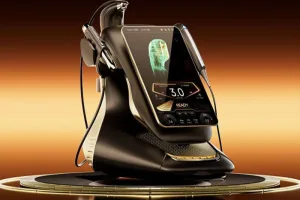
As clinics move toward integrated treatment platforms, the Alva Pro combines diode laser technology with multifunctional DPL treatment in a single system, helping practitioners improve treatment flexibility while reducing equipment costs.
The Alva Pro integrates a high-power diode laser module with a full-featured DPL system. The diode handpiece delivers deep, concentrated energy for effective hair follicle destruction, while the DPL handpiece uses an imported high-purity xenon lamp to perform multiple skin treatments. This dual-handle configuration allows clinics to switch seamlessly between high-performance hair removal and precision light-based skin therapy without changing machines.
The DPL module includes five medical-grade narrow-spectrum filters designed for different clinical applications.
| Filter | Wavelength | Clinical Application |
| AR | 415–515 nm | Acne removal by targeting Cutibacterium acnes porphyrins |
| PR | 550–650 nm | Anti-aging and collagen regeneration |
| VR | 500–600 nm | Vascular lesion treatment targeting oxyhemoglobin |
| HR | 650–950 nm | Hair removal for light skin with optimized melanin absorption |
| SR | 585–950 nm | Pigmentation correction for epidermal and dermal lesions |
This filter-based design enables one platform to perform multiple aesthetic procedures without requiring separate devices.
The Alva Pro supports FASTSHOT technology with a pulse repetition frequency of up to 10 Hz, enabling continuous in-motion treatments comparable to traditional SHR systems while maintaining DPL precision.
Both handpieces incorporate sapphire contact cooling that maintains skin temperatures between -3°C and +2°C before, during, and after treatment. Continuous cooling minimizes discomfort, protects the epidermis, and allows practitioners to safely use higher fluence levels for stubborn hair and pigmentation treatments.
The system features a 15.6-inch 4K Android touchscreen with real-time 3D treatment animations for intuitive operation.
Its integrated patient management system stores:
Dual-band Wi-Fi and Bluetooth 5.0 enable cloud synchronization, remote software management, multi-language switching, and remote machine locking for equipment leasing. These intelligent functions simplify patient management while improving operational control for clinics and distributors.
Designed for high-volume aesthetic clinics, the Alva Pro supports more than 12 hours of continuous operation.
Its imported UK xenon lamp is rated for 900,000 valid shots, while the diode laser bar exceeds 20 million shots, significantly reducing consumable costs over the machine’s lifetime.
A removable food-grade PP circulating water tank simplifies routine cleaning, prevents scale buildup, reduces thermal attenuation, and helps lower annual maintenance costs by nearly 42% compared with conventional fixed-tank systems.
As aesthetic clinics expand their service offerings, adding more standalone devices can create new operational challenges instead of improving productivity. Limited treatment room space, duplicated patient records, and higher equipment costs can all reduce efficiency over time.
The following example illustrates how an integrated treatment platform can help streamline daily operations while supporting business growth.
A medium-sized medical aesthetic clinic in Southeast Asia wanted to expand its treatment portfolio without continuing to invest in multiple single-function devices. Besides occupying valuable floor space, separate systems required different operating procedures and made staff training more complicated.
The clinic also lacked a standardized patient management process. Treatment records were stored inconsistently, making it more difficult to track patient progress, plan follow-up sessions, and build long-term customer relationships. In addition, leased equipment offered limited remote management capabilities, increasing the administrative workload and the risk of overdue payments.
To simplify its workflow, the clinic introduced the Alva Pro dual-handle diode laser and DPL platform, replacing three standalone systems with a single integrated device.
The platform combined multiple treatment applications—including hair removal, vascular therapy, pigmentation correction, and skin rejuvenation—allowing practitioners to perform different procedures without switching between separate machines.
Its cloud-based patient management system automatically stored treatment history, skin assessment data, pigmentation records, and treatment parameters, creating standardized digital patient files for easier follow-up. Remote lock and cloud management features also gave the clinic greater control over leased equipment throughout its lifecycle.
Although outcomes vary depending on clinic size, workflow, and patient volume, the clinic reported several operational improvements during the first three months after implementation:
By combining multiple treatment functions, standardized patient management, and intelligent equipment control, the clinic transformed a fragmented equipment setup into a more efficient and profitable treatment platform.
For clinics comparing different hair removal technologies, return on investment should be evaluated from multiple perspectives.
A multifunction system can generate value by supporting more procedures with one device.
Beyond hair removal, additional applications such as pigmentation correction, vascular treatment, acne management, and skin rejuvenation can increase the number of services available.
Long-life components, reliable cooling systems, and convenient maintenance structures can help reduce operational interruptions and long-term ownership costs.
Clinics that offer multiple aesthetic services can create more comprehensive treatment plans and improve patient retention.
The most valuable equipment is not always the device with the highest output specification, but the system that can be efficiently used across multiple treatment scenarios.
A: DPL and SHR have different advantages. A dpl hair removal machine focuses on wavelength optimization and treatment versatility, while an shr hair removal machine emphasizes comfortable treatment through gradual thermal accumulation. The better choice depends on patient characteristics, treatment goals, and clinic service strategy.
A: Through a secure Wi-Fi cloud terminal, clinic owners or rental companies can set automatic lease lock dates or manually lock the device remotely. When the rental period expires, treatment functions are automatically locked and can only be restored through backend authorization, reducing overdue equipment risks.
A: Yes. Alva Pro is manufactured under an ISO 13485:2016 certified quality management system and complies with key international medical device and safety standards, including:
These certifications demonstrate compliance with internationally recognized requirements for quality, safety, and performance in professional aesthetic equipment.
A: Yes. The Alva Pro supports free LOGO customization for bulk orders and provides a multi-language interface that can be switched directly through the touchscreen system.
Choosing between an shr hair removal machine and a dpl hair removal machine depends on a clinic’s treatment goals, patient needs, and service strategy. SHR focuses on comfortable large-area hair removal, while DPL offers precise light delivery and broader skin treatment applications.
Integrated platforms like the Alva Pro combine diode laser technology, narrow-spectrum DPL, and advanced cooling in one system, helping clinics expand treatment options, improve equipment utilization, and build more efficient aesthetic workflows. Contact us today to explore a customized aesthetic solution for your clinic’s treatment needs.
 23Sep
23Sep
 18Sep
18Sep
 17Sep
17Sep