How Cryolipolysis Works and What to Look for in a Fat Freezing Machine
If you run an aesthetic clinic, a medical spa, or a body-contouring studio, you have watched demand for non-surgical fat reduction grow. Clients want visible...

A 980nm diode laser machine uses a semiconductor diode laser source to deliver near-infrared laser energy at a wavelength of 980nm. In aesthetic and vascular applications, this wavelength can be used for procedures involving superficial vascular lesions, spider veins, telangiectasia, and related skin concerns.
The machine typically combines a diode laser source with an optical delivery system, treatment handpiece, control interface, and cooling components. Depending on the model, it may also provide different operating modes, adjustable treatment parameters, multiple spot sizes, and an aiming beam to help operators position the treatment area.
For clinics, a 980nm diode laser can serve as a dedicated platform for vascular-related treatments. Its practical value, however, depends not only on the wavelength itself but also on how the equipment delivers and controls the laser energy during treatment.
The first specification to confirm is the laser wavelength. For vascular applications, a dedicated 980nm diode laser provides a specific wavelength that can be used for vascular treatment protocols.
The laser source itself also deserves attention. Buyers should confirm whether the stated power refers to optical output rather than electrical input power. These figures are not interchangeable.
It is also useful to check the source manufacturer, output stability, expected service life, and how the manufacturer protects the laser source during operation. A clear technical specification sheet is much more useful than a product description that only states “high power” or “advanced diode technology.”
Optical power indicates how much laser energy the machine can deliver at its output. A higher maximum value gives the operator more available output, but it should not be treated as a performance score by itself.
For vascular treatments, pulse duration is equally important because it determines how long each pulse is delivered. Shorter or longer pulses may be selected according to the treatment protocol, vessel characteristics, and clinical requirements.
Pulse repetition rate, measured in hertz (Hz), indicates how frequently pulses can be delivered. A machine with a higher maximum repetition rate can provide more flexibility when the operator needs to adjust treatment speed.
These three specifications should therefore be considered together. A machine with high optical power but limited pulse control may offer less practical flexibility than its headline power rating suggests.
Fluence describes the amount of laser energy delivered over a specific area, usually expressed in J/cm². It is more useful for treatment planning than looking at power alone because the same output can produce different energy densities when the treatment area changes.
Spot size matters for the same reason. A smaller spot can provide more focused energy delivery, while a larger spot may be useful when treating a broader area.
When comparing a spider vein removal machine, buyers should check whether the manufacturer clearly specifies the available spot sizes and the corresponding treatment parameters. If the product uses interchangeable or multiple spot sizes, the machine may offer greater flexibility across different treatment areas.
The key point is that optical power indicates the machine’s available laser output, while fluence shows how much energy is delivered to a given area. Spot size then determines how widely that energy is distributed, making all three specifications important when evaluating treatment flexibility.
Continuous-wave (CW) operation delivers laser energy continuously, while pulsed-wave (PW) operation delivers energy in controlled pulses. Having both modes gives qualified operators more options when developing treatment protocols.
However, buyers should not assume that more modes automatically make a machine better. The important question is whether the available modes match the intended applications and whether the operator can adjust them in a clear, controlled way.
The delivery method can have a major impact on practical operation. Fiber-optic delivery allows laser energy to reach the treatment handpiece through an optical fiber, which can support access to different treatment areas while keeping the equipment relatively compact.
An aiming beam is another small feature that can make a noticeable difference during treatment. A visible aiming beam helps the operator identify the intended treatment position before delivering the main laser energy.
For example, VenaMED uses a 650nm visible aiming beam together with fiber-optic delivery. This configuration is designed to make positioning more straightforward during treatment.
Laser equipment produces heat during operation, especially when it is used repeatedly throughout the day. An effective cooling system helps keep the machine within its intended operating temperature and protects key components from excessive heat.
Buyers should check how the machine manages operating temperature, whether it provides temperature monitoring, and what protection is available if internal temperatures become too high. These details become increasingly important when the equipment is used repeatedly throughout a working day.
A well-designed machine should also consider airflow, electronic component protection, and operating conditions such as temperature and humidity. These factors can influence long-term equipment reliability.
A machine can have strong technical specifications and still be inconvenient to operate if its controls are difficult to understand.
When comparing machines, look at the display size, parameter adjustment process, treatment presets, and how clearly important operating information is presented. The goal is not to have the most complicated interface. It is to give trained operators the information and controls they need without unnecessary steps.
A touchscreen interface can be particularly useful when operators need to adjust treatment parameters frequently. Buyers should also consider whether the interface is available in the required language and whether the supplier provides user documentation and training support.
Before comparing individual specifications, define what the machine needs to do.
| Buyer Priority | What to Focus On |
| Vascular treatment focus | 980nm wavelength, suitable energy delivery, pulse control, and treatment flexibility |
| High daily treatment volume | Cooling capacity, thermal protection, operating stability, and ease of parameter adjustment |
| Multiple treatment areas | Fiber-optic delivery, available spot sizes, and flexible operating modes |
| Ease of operation | Touchscreen interface, clear controls, aiming beam, and practical treatment workflow |
| Market compliance | CE-related documentation, EMC information, applicable safety documentation, and target-market requirements |
| Long-term ownership | Warranty, technical support, spare parts, training, and manufacturer’s service capability |
| Distribution or OEM/ODM | Product configuration options, documentation support, production capability, and customization support |
For buyers looking specifically for a 980nm diode laser for vascular removal, the machine should provide suitable control over energy delivery rather than simply offering a high maximum output.
The same principle applies to a diode laser for spider veins. Buyers should evaluate whether the wavelength, delivery method, available spot sizes, pulse controls, and operator interface support the intended clinical workflow.
Treatment outcomes will still depend on factors such as vessel characteristics, patient selection, treatment parameters, operator skill, and clinical protocol. Equipment specifications alone cannot guarantee a particular result.
Technical specifications are only part of the purchasing decision. A machine used in a professional clinic also needs to be practical to operate and maintain.
Buyers should check the manufacturer’s documentation, electrical and EMC compliance information, operating environment requirements, cooling design, safety protections, and after-sales support. Depending on the market and final configuration, relevant documentation may include CE-related compliance information, EMC documentation, and RoHS information.
It is also worth asking what the supplier provides after purchase. Installation guidance, user manuals, technical support, spare parts, training resources, and OEM/ODM support can become important once the equipment enters regular clinical use.
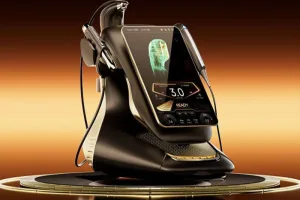
LaserTell’s VenaMED is designed for clinics looking for a portable 980nm diode laser platform for vascular-related aesthetic applications. Instead of focusing on a single headline specification, the machine combines laser output, pulse control, fiber delivery, aiming, cooling, and touchscreen operation in one platform.
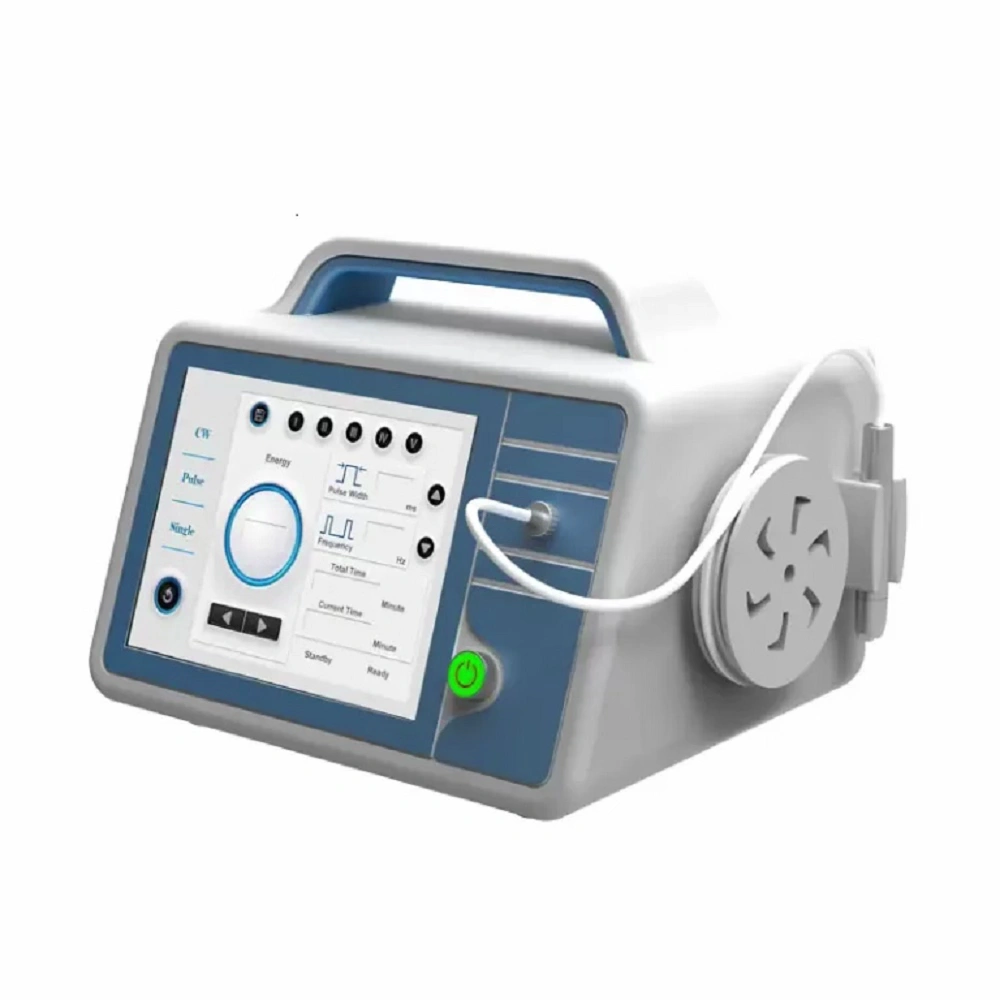
VenaMED uses a 980nm diode laser source with maximum optical power of up to 30W. It supports a pulse repetition rate of up to 10Hz and provides both continuous-wave (CW) and pulsed-wave (PW) operation.
The machine also uses a fiber-optic delivery system and a 650nm visible aiming beam. Five spot sizes are available, giving qualified operators greater flexibility when working across different treatment areas.
For buyers comparing equipment, the relevant specifications include:
Exact pulse-duration, fluence, spot-size, and cooling specifications should be confirmed against the final configuration and technical specification sheet before purchase.
VenaMED is designed with repeated clinical operation in mind. Its cooling and thermal management features include temperature monitoring and overheat protection. The equipment is specified for an operating temperature range of 10–40°C with relative humidity of up to 80% non-condensing.
These details matter because clinics may use the machine for multiple sessions during a working day. Stable thermal management can help the equipment operate within its intended conditions rather than relying only on a high output rating.
The machine combines several features intended to support controlled operation, including fiber-optic energy delivery, a visible aiming beam, touchscreen parameter control, and thermal protection.
For buyers in different markets, compliance documentation should also be reviewed before placing an order. LaserTell can provide applicable CE-related, electrical, EMC, and other technical documentation according to the final equipment configuration and target market.
Where specific standards or certificate numbers are required, buyers should request the relevant documentation from the supplier rather than relying on general claims on a product page.
VenaMED is primarily positioned for vascular-related aesthetic applications, including spider veins, telangiectasia, vascular lesions, and facial redness.
Its portable form can be useful for clinics that need a professional laser platform without a large fixed installation. The fiber-optic handpiece also provides flexibility when working on different areas of the face or body.
The machine may also be considered by distributors and importers looking to expand their vascular laser equipment portfolio. For OEM/ODM buyers, the supplier’s technical documentation and configuration options should be discussed according to the intended market.
The main advantage of VenaMED is not simply its 30W output. It is the combination of a dedicated 980nm diode laser source, flexible operating modes, fiber delivery, a 650nm aiming beam, multiple spot sizes, cooling protection, and touchscreen control.
For a buyer who has already defined vascular treatment as a core application, this combination provides a more useful basis for evaluation than comparing maximum power alone.
Clinics can also estimate the commercial potential of the equipment based on their own treatment volume, pricing, operating costs, and local market conditions. For example, a clinic performing four to six sessions per day over 22 working days would handle roughly 88–132 sessions per month. At an average treatment price of $80–150, gross treatment revenue could range from approximately $7,040 to $19,800 per month before operating expenses.
Actual profitability will depend on the clinic’s treatment pricing, utilization, labor, marketing, maintenance, and other costs. Buyers should therefore use their own figures when calculating payback and ROI.
It can be used for professional vascular-related aesthetic applications, including spider veins, telangiectasia and selected vascular lesions, subject to clinical assessment and local regulations.
Compare wavelength, verified optical power, pulse control, fiber system, cooling, safety features, usability, service support, warranty, compliance documentation and manufacturer experience.
There is no universally “best” wavelength. Different wavelengths have different absorption and penetration characteristics. The appropriate wavelength depends on the target vessel, treatment area and clinical protocol.
Use depends on local regulations, device classification and operator qualifications. Clinics should verify applicable regulatory requirements before offering treatments.
Distributors should evaluate product specifications, compliance documentation, production capability, OEM/ODM support, warranty, spare parts, technical training, marketing materials and after-sales service.
Choosing a 980nm diode laser machine, buyers should consider the wavelength alongside optical power, pulse control, fluence, spot size, delivery method, cooling, and user interface to determine whether the machine can meet their intended treatment needs.
For vascular applications, buyers should first define their treatment requirements. They can then compare complete equipment configurations rather than choosing a machine because it has the highest power or the lowest quoted price.
LaserTell’s VenaMED provides a portable 980nm diode laser platform with up to 30W optical power, CW/PW operation, fiber-optic delivery, a 650nm aiming beam, five spot sizes, and touchscreen control. For clinics, distributors, and importers evaluating equipment for vascular applications, requesting the detailed specification sheet and configuration information is the next step toward a more informed purchasing decision. Ready to Compare Your Options? Contact LaserTell to request the VenaMED 980nm Diode Laser Machine specification sheet, discuss your application requirements, or get a tailored quotation for your clinic or distribution business.
 23Sep
23Sep
 18Sep
18Sep
 17Sep
17Sep