How a Body Slimming Machine Works: Heat, Vacuum and Ultrasound Explained
Key Takeaways What a Body Slimming Machine Actually Does If you ask a practitioner what body contouring means, the answer may surprise you: nobody is...

A CO2 laser smoke evacuator collects tissue plume near its source and passes the captured air through a filter system. Choose one by checking the complete capture setup, tubing compatibility, filter evidence, running costs, and support for your intended use.
A large filter percentage can look reassuring on a quote. Yet it leaves practical questions unanswered: where will the inlet sit, which hose fits, and who orders the next filter? If you are comparing systems, those gaps can make a purchase hard to assess. This guide turns them into questions you can put to suppliers before placing an order.
Key Takeaways
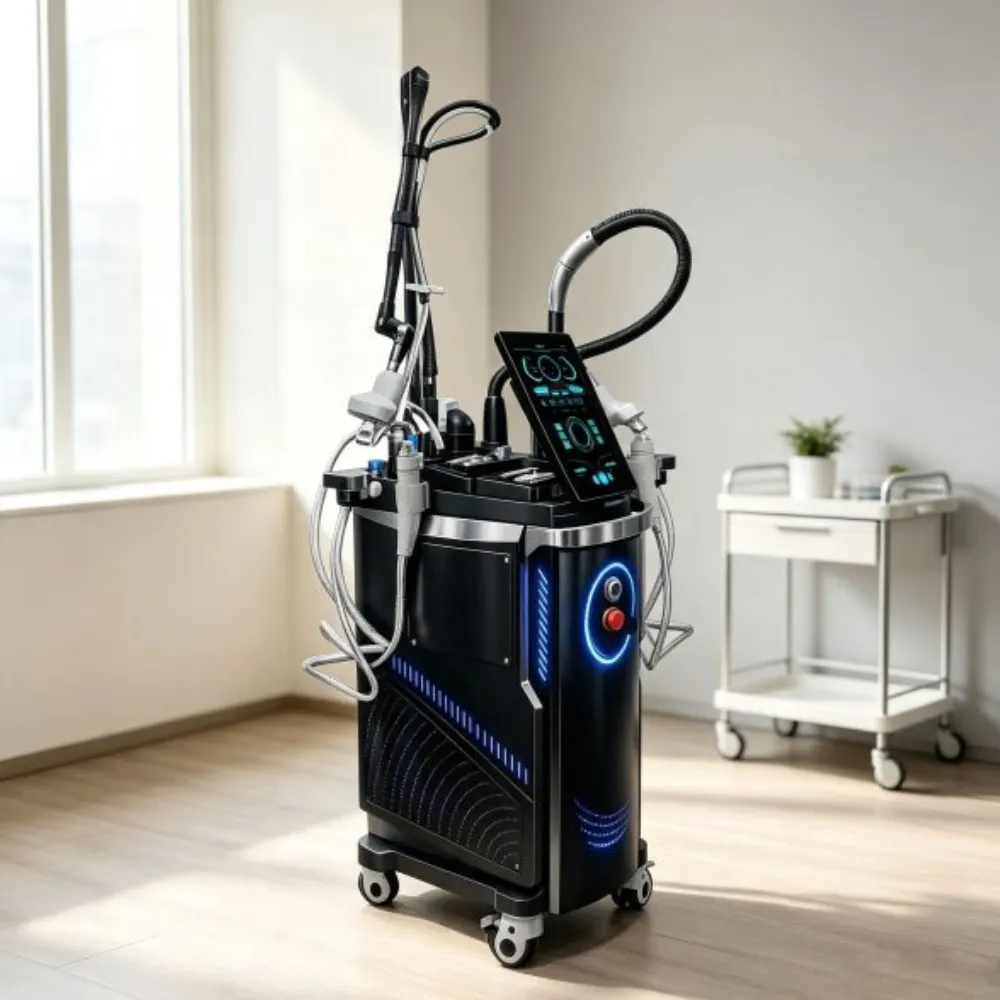
Plume is the mixture of smoke, vapors, and debris produced when energy devices act on tissue. A CO2 laser smoke evacuator brings an intake close to that source, draws captured material through tubing, and filters the air. The inlet, hose, filter, and suction unit form one system.
In its 1996 NIOSH HC11 guidance on surgical smoke, NIOSH explains that general room ventilation alone is insufficient to control these exposures. It recommends local capture and describes an inlet position within 2 inches of the surgical site. Treat that historical recommendation as context for reviewing the current device instructions and your facility’s assessment, rather than a complete installation rule.
The practical buying question is whether the proposed setup allows staff to keep the inlet in the intended position while working. Ask the supplier to show the full assembly. A brochure photograph of the suction unit cannot answer that question.
Illustrative scenario: A buyer selects a CO2 laser smoke evacuator from its filter percentage alone. During a setup review, the team realizes that the proposed inlet has no agreed support position beside the handpiece. They pause the order and request a complete accessory list and demonstration.
The CCOHS guidance on laser plumes describes workplace risk assessment, local exhaust, training, and personal protective equipment as parts of plume control. It also distinguishes particle filtration from gas capture. Buying a unit should therefore sit within a wider facility review.
Before choosing a CO2 laser smoke evacuator, identify the laser platform and intended workflow. If you are comparing LaserTell fractional CO2 laser systems, use the model information to prepare a configuration request. Ask which accessory requirements need written confirmation before you order the platform and evacuation equipment.
An airflow figure needs a test context to be useful. When reviewing a CO2 laser smoke evacuator, ask whether the figure describes the bare unit or a system fitted with the proposed filter, hose, and inlet. Request the units, operating setting, and test arrangement.
Compare suppliers on the same basis. If one provides a maximum figure without tubing and another reports a specific assembled setup, mark the comparison as incomplete. Ask for the missing information before drawing a conclusion.
Your comparison sheet should connect each claim to a document and a review action:
| Supplier Claim | Evidence to Request | Review Action |
|---|---|---|
| Stated airflow | Test conditions and fitted components | Match the report to the quoted assembly |
| Compatible tubing | Dimensions, part numbers, and approved adapters | Review the entire inlet-to-unit path |
| Automatic activation | Supported devices and connection method | Confirm the proposed laser combination |
| Filter performance | Filter model and test report | Separate filtration from overall capture |
| Quiet operation | Setting, distance, and measurement conditions | Assess the intended working setup |
These are suggested purchasing checks, not universal regulatory test requirements. Your facility can add its own acceptance criteria with the relevant technical staff.
For a CO2 laser smoke evacuator, compatibility means more than a hose fitting over a port. List the inlet, tubing, adapters, filter, controls, and any supports as separate parts. Ask the supplier to identify which are included, optional, reusable, or intended for single use.
Review the assembly in the space where it will be used. Can the team position the inlet without blocking the working area? Where will the hose run, and can staff reach the controls? Write down the proposed arrangement so that the delivery can be checked against it.
A named platform gives this discussion a clear starting point. For example, the FemiMED NEO product information identifies a LaserTell CO2 platform to discuss with the supplier. That page alone does not establish which CO2 laser smoke evacuator, connector, or activation accessory is compatible.
Ask for a reply that names both equipment models. Keep open questions on the quote. If a part number is missing, don’t accept a general promise in its place.
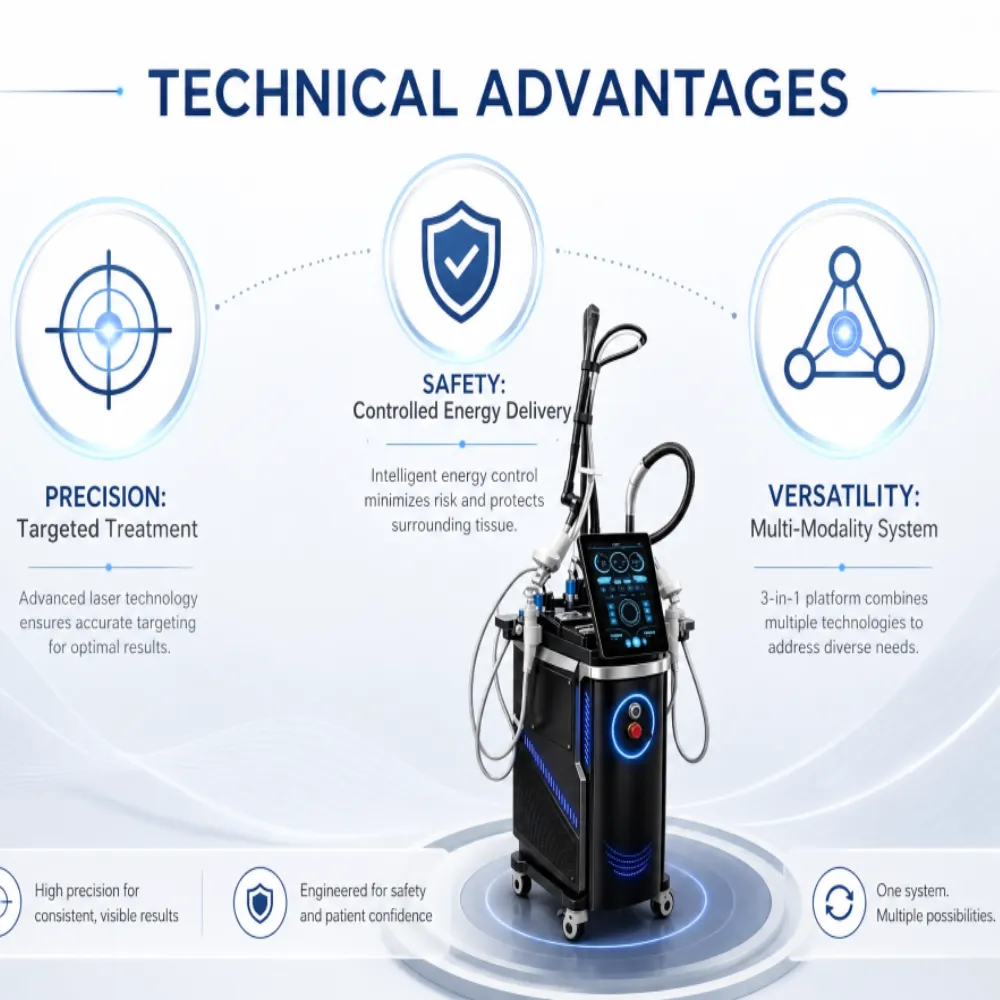
Filter descriptions often combine several functions in one short line. Ask what each stage does and which evidence supports it. A particle-filter claim does not, by itself, answer questions about gas removal or odor control.
CCOHS describes plume systems that use activated carbon for gases and ultra-low penetration air, or ULPA, filtration for particles. It also notes that suitable airflow depends on plume generation and the system used. Those distinctions are a useful starting point for comparing a CO2 laser smoke evacuator.
Request the current instructions for use, often called the IFU, for the quoted filter and unit. Check the approved filter reference, replacement instructions, and any limits on use. Do not assume a replacement cartridge is suitable because its size or product description looks similar.
If a seller uses the word “medical,” ask for the documents that establish the product’s intended use and status in your market. A listing for an industrial laser fume extractor is not enough to establish suitability for tissue plume.
Ask two questions about a CO2 laser smoke evacuator. How much plume reaches the inlet? What does the filter remove from the air that passes through it? A filter test answers the second question under set conditions; it doesn’t show how much plume escapes in your room.
The ASLMS plume position statement, approved in 2017, supports close-source collection and filter changes according to the manufacturer’s recommendations. It is professional guidance, not proof that a particular product or clinic setup meets every local requirement.
Avoid turning a filtration percentage into a claim about infection prevention. Likewise, a lack of visible smoke or odor is not evidence of zero exposure. Ask for system evidence and have the facility’s responsible staff decide what assessment is needed.
Keep your CO2 laser smoke evacuator comparison in separate columns for capture setup, particle-filter evidence, gas-filter evidence, and operating instructions. That simple separation makes missing information easier to spot and prevents a single headline number from deciding the purchase.
The initial CO2 laser smoke evacuator quote is only the start of a cost comparison. Request a list of replacement filters, tubing, adapters, and other parts needed for the proposed workflow. Each line should include a part number, pack quantity, price, and ordering route.
Ask about delivery times and availability in your country. Record whether freight and taxes are included. Where the instructions require a particular replacement part, use that part in the budget rather than pricing an unconfirmed substitute.
Illustrative scenario: A clinic receives two quotes with different accessory lists. The lower headline price leaves out the inlet support and does not identify a replacement filter. The buyer requests matching item lists before comparing costs; the example does not assume either supplier will ultimately be cheaper.
Use a budget that shows where each figure comes from:
| Cost Item | Input Needed | Budget Basis |
|---|---|---|
| Unit and accessories | Written quote | Purchase or lease terms |
| Filters | Part price and replacement rules | Documented use assumptions |
| Tubing and disposables | Pack size and intended use | Expected workflow |
| Service | Written scope and exclusions | Agreed contract period |
| Training and handling | Facility and supplier inputs | Identified responsibilities |
Ask how the CO2 laser smoke evacuator tracks filter use. What tells staff that a change is due? Look for a timer, status light, service plan, or a mix of these. Check the current IFU; don’t budget from the largest number in a sales summary.
For a concrete example, the FUMOVAC 700 operator’s manual lists filter-life settings of up to 35 hours at low motor speed, 24 hours at medium, and 18 hours at high. These are conditions for that model’s filter-life system. They are not a universal replacement interval or a promise about another device.
When budgeting for a CO2 laser smoke evacuator, use the replacement rules for the quoted model and state your assumptions. Show uncertain inputs as open items. Avoid converting a maximum filter-life figure into a guaranteed cost per procedure.
For the same comparison period, total the equipment cost, consumables, service, training, and handling costs. Keep this spending estimate separate from any claim about treatment revenue or clinical benefit.
Ask how the CO2 laser smoke evacuator starts and stops in the proposed setup. Identify whether control is manual, by footswitch, or through a supported activation accessory. A feature advertised for an electrosurgical device does not establish that it works with your CO2 laser.
Include controls in the demonstration plan. Staff should be able to identify the operating state and understand the relevant indicators from the current instructions. Ask who will provide training and what materials remain with the clinic after delivery.
Noise also needs context. Request the operating setting, measurement distance, and fitted components behind a quoted noise figure. Then assess communication and comfort during a demonstration of the intended arrangement. Avoid ranking units from numbers measured under different conditions.
Name the person responsible for routine CO2 laser smoke evacuator checks and the person who orders replacement parts. Keep the applicable instructions where staff can find them. Make sure the team knows how to report a fault and where to obtain support.
Build records around the manufacturer’s requirements and the facility’s procedures. Useful fields may include the unit identity, filter reference, replacement date, relevant indicator status, and action taken. The record should help the next person understand what happened without guessing.
Used filters need handling and disposal arrangements consistent with the IFU, facility policy, and applicable local requirements. Do not create a single waste rule for every country or device. Confirm responsibility before the system enters use.
A CO2 laser smoke evacuator maintenance plan should also cover staff changes. Include the system in new-user training and keep supplier contact details current, so knowledge does not depend on one experienced employee being present.
Bring the technical and commercial questions together before placing the order. Your CO2 laser smoke evacuator file should identify the exact unit, intended use, filter, accessories, and supported setup. Ask for documents that correspond to the product and destination market.
At a minimum, your purchasing review can request:
These are proposed buying documents, not a claim that the same legal checklist applies everywhere. Have the appropriate facility staff review the requirements for your location.
Illustrative scenario: A distributor prepares to hand over a CO2 laser smoke evacuator but has not named the person who will teach filter replacement. The clinic adds a training session and a record of supplied parts to the handover plan. No clinical outcome or cost saving is assumed.
Agree on who checks the delivered assembly, records any open items, and confirms that training took place. Separate a basic delivery check from any technical performance assessment the facility requires. Do not describe a visual demonstration as proof of exposure control.
Keep a short support sheet in the same file:
Ask for clear answers before the handover. A broad promise of lifetime support leaves these questions open.
Do not assume that it can. NIOSH distinguishes room ventilation from local collection at the source. Ask the facility’s responsible staff to review how the CO2 laser smoke evacuator fits into the overall control plan, including ventilation, work practices, and protective equipment.
Follow the instructions for the exact unit and filter. Replacement rules and indicators can differ, so there is no single interval to apply to every CO2 laser smoke evacuator. Confirm the required checks during training and use the documented rules when planning consumables.
No. A filter percentage describes performance under specified test conditions. It does not establish that all plume reaches the intake or that exposure has been eliminated. Review capture arrangements, the assembled system, and the facility’s assessment alongside the filter evidence.
Only if the proposed combination supports that function. Ask for the exact activation accessory, connection method, and written model compatibility. Include it in the demonstration request. Do not assume that an accessory designed to detect an electrosurgical device will work with a laser.
Request the unit, filter, inlet, tubing, adapters, controls, and any required supports as identifiable items. Add training, service terms, and replacement-part information. For a CO2 laser smoke evacuator, an itemized quote makes technical review and ongoing cost planning much clearer.
Choose a CO2 laser smoke evacuator with evidence for the assembled setup, a clear consumables plan, and named maintenance responsibilities. If you are considering a LaserTell CO2 platform, request model-specific configuration details and list the evacuation questions you need answered. Confirm the proposed equipment and accessories before placing an order.
 13Nov
 13Nov
 12Nov
 11Nov