Why Is the “2-in-1” Diode Laser + IPL Device the Most Efficient Investment for Modern Aesthetic Clinics?
Introduction
According to industry research data, the global market for medical aesthetic lasers stood at approximately $3.1 billion as of 2024; forecasts suggest that this figure could reach $7.1 billion by 2033. (Source:https://www.grandviewresearch.com/)
This guide will provide an in-depth analysis of this device’s technical design and clinical advantages, explaining why systems like the DepiMediX-Android have emerged as leaders in the field of aesthetic engineering. In addition, this guide will reveal how this laser hair removal equipment can help clinics increase revenue, optimize operational processes, and help you become a leading integrated medical aesthetic service provider in the industry.
When this “two-in-one” integrated therapy device switches to laser mode, the 808nm light energy will penetrate the epidermis and reach the dermis. The melanin in the hair follicle absorbs this energy and converts it into heat.
2. “4D+” Wavelength Advantages
755nm: This wavelength is easily absorbed by melanin, making it particularly suitable for removing fine, soft hair and providing a comfortable treatment experience; in the field of hair removal, it is often considered a modern upgrade to alexandrite laser technology.
808nm: 808nm diode laser recognized as the “Gold Standard” wavelength, this setting strikes a perfect balance between safety and efficacy, making it suitable for all common skin types and hair characteristics. Thanks to its deep penetration capabilities, it delivers powerful and thorough hair removal results.
940nm: This wavelength is primarily absorbed by oxyhemoglobin and water; consequently, it effectively targets the vascular supply system of the hair follicles and can also be utilized for the treatment of vascular lesions.
1064nm: This is the safest wavelength for dark skin (Fitzpatrick V-VI type). Since melanin in the epidermis exhibits extremely low absorption of this wavelength, light energy is able to penetrate deeply, thereby minimizing the risk of post-inflammatory hyperpigmentation. This ensures that this “2-in-1” integrated semiconductor laser and IPL system possesses truly universal applicability.
3. IPL/DPL Spectral Filtering Technology
This “two-in-one” semiconductor laser + IPL integrated treatment device uses a crystal filter in its IPL/DPL module to narrow a broad spectral beam for precise targeting of specific clinical treatment goals.
420-1200nm (or with a dedicated filter): Precisely targets Propionibacterium acnes (P. acnes) to clear acne and reduce inflammation.
530/560–1200nm: Primarily targets melanin for the treatment of sun spots and freckles; it also stimulatesing collagen for general skin rejuvenation.
640-1200nm: Targets deeper pigmentation and the larger, darker hair follicles, offering another modality for hair reduction alongside the diode laser.
Product Specifications: The DepiMediX-Android Series in Detail
Technical Parameter
Specification Details
Model
DepiMEDiX_Android Diode+IPL
Device Power
>4500W
Laser Bars
Imported, 500W to 2400W (Customizable)
Cooling System
Triple Cooling: Contact (-20°C) + Air + Closed Water
The Diode Laser component provides fast, comfortable, and permanent hair reduction for all major laser hair removal areas:
Face & Neck: Upper lip, chin, sideburns, and neck for both men and women.
Body: Underarms, full Brazilian bikini line, legs, arms, chest, back, and abdomen.
Hair Types: Highly effective on coarse, dark hair. With multi-wavelength capability (755nm, 808nm), it can also address finer and lighter hair more effectively than older technologies.
Utilizing specific filters, the IPL module transforms the device into a powerful anti-aging workhorse. It stimulates fibroblast activity to enhance collagen and elastin production, resulting in:
Reduced appearance of fine lines, wrinkles, and crow’s feet.
Improved skin texture, firmness, and overall radiance.
Minimization of pore appearance.
3. Targeted Pigmentation and Vascular Lesion Removal
The 2-in-1 Diode + IPL Machine excels as a pigmentation removal machine. The broad-spectrum light targets melanin clusters in sun spots, age spots, and freckles, causing them to darken and flake off. Simultanelessly, it targets hemoglobin in broken capillaries, telangiectasia (spider veins), and redness associated with rosacea, causing the vessels to coagulate and be reabsorbed by the body.
Hardware Durability: The Engine Inside the Machine
Laser Diodes: Often imported from leading manufacturers (e.g., Germany, USA), these are rated for tens of millions of shots, ensuring the core diode laser hair removal function remains powerful for years.
IPL/DPL Lamps: High-quality, imported xenon lamps ensure consistent spectral output and longevity, supporting hundreds of thousands of flashes. The cited 20-million-pulse capacity for DPL technology represents an industry-leading benchmark for durability.
Robust Cooling System: The triple-cooling design (contact, air, closed water) is not just for comfort; it is critical for protecting these expensive internal components from heat damage during continuous use, directly extending the machine’s lifespan.
Ergonomic Handpieces: Lightweight, well-balanced handpieces reduce practitioner fatigue during long treatment days, improving precision and job satisfaction.
Frequently Asked Questions
Q1: Is treatment with a 2-in-1 Diode + IPL Machine painful?
A: Modern systems are designed for maximum comfort.Most patients describe the sensation as a quick, warm “snap” or rubber band flick, followed by immediate cooling. It is significantly more comfortable than older laser generations or waxing.
Q2: What does basic maintenance involve?
A: Proper maintenance is simple but crucial:
Cooling System: Use only distilled or deionized water in closed-loop systems and change it as per the manufacturer’s schedule (e.g., annually) to prevent mineral buildup.
Filtration System: Replace the internal water filter every 6 to 12 months.
Cleaning: Before and after each patient visit, please wipe the treatment window (sapphire/glass surface) of the treatment handpiece with medical-grade alcohol to ensure hygiene and maintain optimal light transmission.
Environment: Please place the device in a clean, dust-free, and temperature-controlled environment.
Q3: How many treatment sessions are typically required?
A: To achieve permanent diode laser hair removal, most patients typically need 6 to 8 treatments, spaced 4 to 6 weeks apart, to ensure coverage of all hairs in the active growth phase. For IPL treatments such as pigmentation removal or skin rejuvenation, significant improvements can usually be observed after 3 to 5 treatment sessions (each spaced 3 to 4 weeks apart).
Conclusion
Investing in a high-quality “2-in-1” integrated diode laser and IPL treatment system is a highly strategic decision—one that enables your clinic to deliver next-generation, cutting-edge aesthetic medical services. If you are interested, please feel free to contact us.
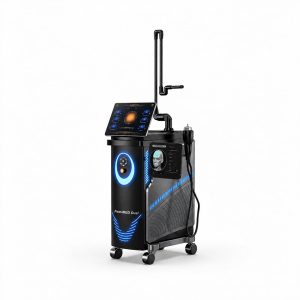
RF Microneedling and CO2 laser resurfacing are two highly effective treatments for combating signs of aging, improving skin texture, and addressing skin imperfections. While both aim to rejuvenate the skin, their methods, effects, and suitability differ. Here’s a detailed comparison to help you understand the key distinctions and make an informed decision.
Radiofrequency (RF) Microneedling is a cutting-edge, minimally invasive procedure that combines microneedling with RF energy to enhance skin rejuvenation, tightening, and resurfacing. Here’s a comprehensive breakdown based on your information:
Q1: How does this device kill germs and bacteria?
A1: The device works by breaking down the molecular structure of bacteria and germs, effectively destroying them. This helps in keeping the skin cleaner and more hygienic, reducing the risk of infections.
How Laser Hair Removal Works The laser targets the pigment (melanin) in hair follicles during their active growth cycle. The light energy is absorbed by...